Jun 19, 2017
This budget would be devastating to our national parks, wildlife refuges and other public lands, and it betrays the Secretary's trust responsibility to Native tribes.
The Public Record
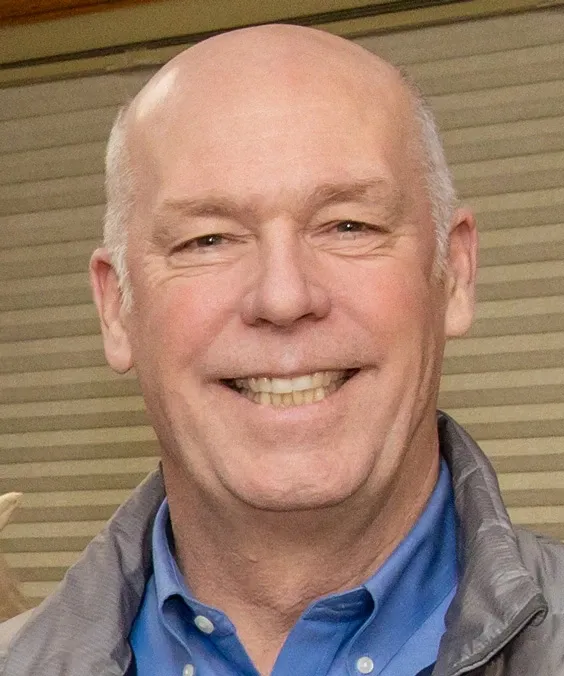
Ryan Keith Zinke is an American politician and businessman who served as the U.S. Representative for Montana's at-large congressional district from 2015 to 2017. A member of the Republican Party, Zinke was appointed as the Secretary of the Interior under President Donald Trump, serving from March 2017 until January 2019. During his tenure, he focused on issues such as energy development, public land management, and conservation efforts. Zinke has also been involved in various initiatives related to veterans and outdoor recreation.
This budget would be devastating to our national parks, wildlife refuges and other public lands, and it betrays the Secretary's trust responsibility to Native tribes.
If you are going to operate on public land, then the public should have a say because we are all stewards of our public lands.
I would be honored to accept your invitation. And I will be out there in--one thing good about this job is you see a lot of beautiful country and you meet a lot of great, great people. I'll commit to go out there, and I'll commit to work…
Arlington is a national disgrace, and I'm talking about the building up on top--Lee's home.
I suppose I should not be surprised the Administration is proposing to open up the Arctic National Wildlife Refuge to oil drilling.
I fully understand the responsibility of the Executive Branch, as well as the responsibility of Congress.
The budget gives us a very clear indication of President Trump's and Secretary Zinke's priorities.
My intention, so you know, is we're going to rewrite the rule and go through the complete public process on it because both you and I agree on this issue that flaring is a waste.
These cuts would significantly reduce funding for tribal education programs and social services. This is unacceptable, and it is a betrayal of our trust responsibilities to tribes.
If we want to balance the budget, this is a starting point of what a balanced budget would look like.
I expect a reclamation project and a plan to restore those lands to its condition.
I think the rule should have been in a CRA. It would not have been easier to rewrite it.
The budget represents a balanced budget. It is a starting point, but it is a reflection of a balanced budget.
We think the process will be about 2 and a half to 3 years, which will be less than the 5 years.
I hope we can work together to create income streams that we can rest against some of our more priority projects which include infrastructure and making sure we honor our treaty obligations.
We think that is an opportunity. We are looking at public-private partnerships as part of it.
I look at it as a holding on public land and it is better to provide incentives either to inject, to move, to store, rather than just to flare.
I think part of the job is to make sure that, again, we are good stewards of the land and that means you return it to better condition than you found it.
I certainly appreciate and support that Alaska is different and Alaska has strategic, economic, and cultural value.
We have to make sure that as partners we hold industry accountable, that we are transparent in what we are doing.
I think being energy independent and, in some cases, energy dominant is in our best interest of the country.
Politicians like Ryan Zinke