Sep 27, 2010
If that's the case, then we need to know that. It may seem counterintuitive, but I think we need to base our funding and base our actions on the real research.
The Public Record
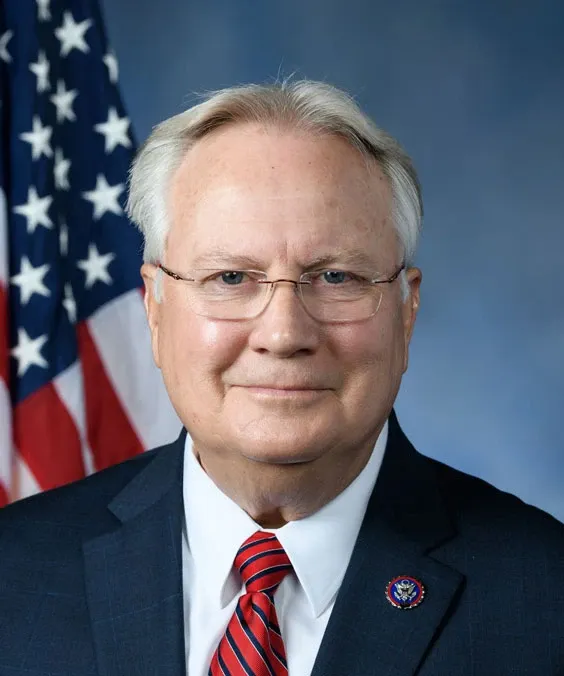
Roger Wicker is an American politician serving as the senior United States senator from Mississippi since 2008. A member of the Republican Party, Wicker previously served as a United States Representative from 1995 to 2008. Throughout his tenure, he has focused on issues such as national defense, economic development, and healthcare. Wicker has been involved in various legislative efforts and has held significant positions on committees, including the Senate Armed Services Committee.
If that's the case, then we need to know that. It may seem counterintuitive, but I think we need to base our funding and base our actions on the real research.
Of course we're holding a hearing today into the safety provisions of our last highway bill and the way it is administered through NHTSA.
In 2008, I attempted to address this problem by offering an amendment that would have added wind coverage to the National Flood Insurance Program on a voluntary basis.
One of the best things that Congress could do for the Gulf Coast region... is to resolve the nuances associated with insuring against hurricanes.
I am glad that the Senate voted last night by unanimous consent to extend the NFIP through September of next year.
I appreciate your holding this hearing, and I am grateful for the Committee giving me the opportunity to appear today as a witness on the reauthorization of the National Flood Insurance Program.
After Hurricane Katrina, we learned that flood hazard risk in many coastal areas of Mississippi and many parts of the country was not accurately reflected by FEMA's flood insurance maps.
Unfortunately, 5 years after Hurricane Katrina, that major event has not prompted a reform in the law.
One of the best things Congress could do for the vast coastal areas of this country... is to resolve the nuances associated with insuring against hurricanes.
I still support the multiperil debate, although I understand the arguments against it.
For all practical purposes, private insurance coverage for wind damage is no longer available in the Gulf Coast area since Hurricane Katrina.
The NFIP needs to be reauthorized on a long-term basis and in a way that addresses some of the unique challenges that residents along coastal areas face.
In this year alone, the National Flood Insurance Program (NFIP) has lapsed three times, creating uncertainty and unnecessary problems for property owners who rely on the NFIP for flood insurance.
The legislation I have introduced, S. 3672, would remove the property owner from this debate and put the burden where it belongs, on the insurers.
The Federal Government should not be involved in subsidizing this controversial life-altering research with taxpayer dollars.
The destruction or cloning of human embryos for research purposes raises profound moral and ethical challenges.
People suffering from dozens of diseases and conditions, including cancer, juvenile diabetes, Parkinson's, MS, leukemia, lymphoma, spinal cord injuries, and corneal regeneration, among many others, are turning to adult and induced…
In my opinion, the body of scientific evidence developed since 1995 has served only to strengthen the argument in favor of Dickey-Wicker.
I think it is troubling--particularly for a law professor and somebody who dealt with the issue for decades--when asked at her hearing whether she personally believes there was a right to self-defense that existed before the Constitution…
The resilience shown after Katrina by the local folks, not necessarily the politicians but the local people and local governments stepping forward, is just amazing.
Runoff puts more oil pollution in our waters. Tankers put more oil pollution in our waters. Seepage is responsible for more.
Politicians like Roger Wicker