Mar 23, 2015
Do you agree with General Petraeus that we have the capability to take out Assad's air force?
The Public Record
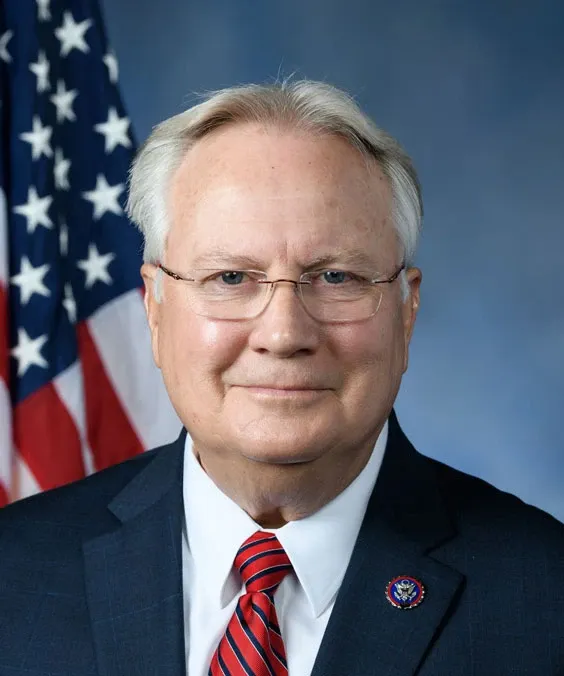
Roger Wicker is an American politician serving as the senior United States senator from Mississippi since 2008. A member of the Republican Party, Wicker previously served as a United States Representative from 1995 to 2008. Throughout his tenure, he has focused on issues such as national defense, economic development, and healthcare. Wicker has been involved in various legislative efforts and has held significant positions on committees, including the Senate Armed Services Committee.
Do you agree with General Petraeus that we have the capability to take out Assad's air force?
I think we could have gotten a Status of Forces Agreement in Iraq if we'd really, really tried.
I continue to believe that the best policy for the United States is to pursue the two-state solution.
I think under those circumstances, the most likely alternatives will either be military action against Iran, which I am on record and I will say again I think would be a mistake, a mistake by us and a mistake by the Israelis.
I think that they are headed to a nuclear weapon with the deal or without the deal.
I think Commissioner Clyburn hit the nail on the head in terms of we are looking at moving to phase two of the Mobility Fund.
Can the Commission assure rural consumers that there will be no reductions in their access to wireless services?
But Senator Manchin is right; we got it pretty good now. Innovation is pretty good now and I do wonder if this is a solution in search of a problem.
The distinguished Senator from Vermont is quite welcome, and I am glad we were able to accommodate each other. ____________________
Response to written questions submitted to Hon. Charles F. Bolden, Jr. by: Hon. Roger F. Wicker
We are particularly disappointed that MED-COM is not able to go forward; a project that has received essential equipment.
We were weeks away from deployment. Mississippi was a leader in deploying a network for first responders.
This was unfortunate because tens of millions of state and Federal tax dollars had been spent.
Mississippi today has a mature governance structure for the network that was created in 2005.
However, one of the fundamental conditions imposed on all 700-megahertz public safety broadband waivers is the commitment of the waiver recipients to design, develop, and deploy a network that is fully interoperable.
I hope that your offer to continue working with the state comes to fruition.
Mississippi was one of the grantees under BTOP and moved forward very aggressively with greater speed than any other recipient.
Given the critical importance of maritime surveillance to our national security and our economy, we cannot afford a gap in this capability.
I am encouraged by continued investment in technologies that support our military strategy in the Asia-Pacific region.
Are we being a little more realistic about the expected timeframe in which we are going to have to use these aircraft?
I think the Senate is almost unanimous in agreeing that a return to sequestration would be most harmful.
Politicians like Roger Wicker