Jun 19, 2017
Today we will examine the Universal Service Fund and its impact on broadband investment in rural America.
The Public Record
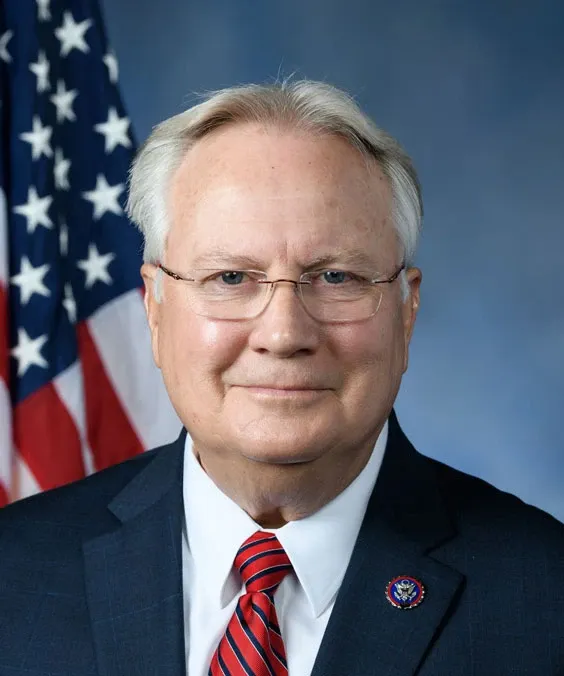
Roger Wicker is an American politician serving as the senior United States senator from Mississippi since 2008. A member of the Republican Party, Wicker previously served as a United States Representative from 1995 to 2008. Throughout his tenure, he has focused on issues such as national defense, economic development, and healthcare. Wicker has been involved in various legislative efforts and has held significant positions on committees, including the Senate Armed Services Committee.
Today we will examine the Universal Service Fund and its impact on broadband investment in rural America.
Any direct infrastructure spending Congress approves should be targeted exclusively to the few remaining census tracts, mostly rural and tribal, where there is currently no competitive broadband service.
The FAST Act mandated that the FRA convene a working group to evaluate the restoration of inner city passenger rail between New Orleans and Orlando.
Let me just say with regard to the air traffic control proposal that this is a tough sell in states like my state of Mississippi.
I want to thank the witnesses and members of the subcommittee for a very informative and valuable hearing.
Madam Ranking Member, let us agree that members need to get their questions for the record in within five business days.
We want to be teammates in this regard. Tell us what you need with regard to authority.
I am probably at first blush going to be a little disappointed when I see this shipbuilding plan, but it is not because the leadership of the Navy represented at this table and on up, to include the top leadership of DOD, does not believe…
As chairman of this subcommittee, I can tell you that I want to help you proceed with that sense of urgency on a number of these issues, including accelerating the 355-ship buildup.
The subcommittee met, pursuant to notice, at 9:03 a.m. in Room SR-232A, Russell Senate Office Building, Senator Roger F. Wicker (chairman of the subcommittee) presiding.
The complementary nature of both of these aircraft into the future for our aircraft carrier Navy is very exciting.
The reason we adopted sequestration in the first place was as an incentive to make us come to grips with entitlement programs.
I also said in my opening statement--on short-range defense systems and long-range precision fires, can you give us anything on the Navy and the Marine Corps leveraging each other's capabilities?
General Walsh, before I recognize Senator Rounds, if we came back early on a Monday morning and went to Aberdeen, what could this subcommittee--what sort of testing could you show this subcommittee?
For too long many Marine Corps modernization programs have suffered from drown-out development timelines and unrealistic requirements and cost overruns.
An unrelenting operational tempo has damaged readiness and undermined critical modernization efforts to replace aging equipment.
There is no better friend than a marine. There is also no worst enemy than a U.S. Marine.
Politicians like Roger Wicker