Mar 5, 2018
The 2-year budget agreement signed by President Trump in February will help provide much needed stability and relief.
The Public Record
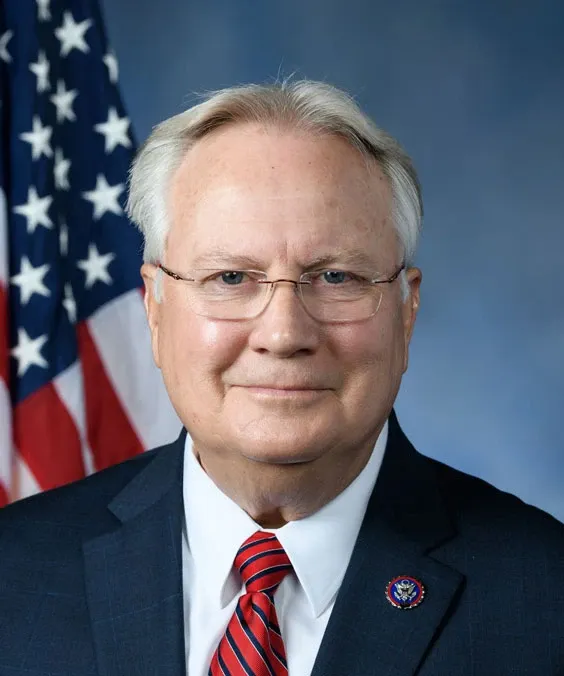
Roger Wicker is an American politician serving as the senior United States senator from Mississippi since 2008. A member of the Republican Party, Wicker previously served as a United States Representative from 1995 to 2008. Throughout his tenure, he has focused on issues such as national defense, economic development, and healthcare. Wicker has been involved in various legislative efforts and has held significant positions on committees, including the Senate Armed Services Committee.
The 2-year budget agreement signed by President Trump in February will help provide much needed stability and relief.
Years of continuous combat operations and inadequate funding have put the Navy and Marine Corps aviation into a hole from which they are only now beginning to recover.
Last week, United States Government approved selling 210 Javelin antitank missiles and 37 launchers to Ukraine.
There was a RAND study that came out in December... they said that, under plausible scenarios, the United States could actually lose the next war.
Should we dismiss it out of hand, or would your advice to the President of the United States be to follow up, with caution?
Our National Defense Strategy now states that, for long-term security competitions, our competition with China and Russia are foremost.
I think one of the most strategic acts in the next few months or in the next few years is that Russia demonstratively lose in Ukraine.
The law is there, but since 1971, there has never been any effective enforcement over the preference action.
We need to get the attention of those responsible and get a timetable that will work and avoid, if I might say, a train wreck coming either figuratively or literally.
I do think the Chairman and Ranking Member's statements indicate that, on behalf of the Congress, they're trying to say that patience is running out.
What steps do each of you recommend that we take in Congress to help the Navy attract and retain the personnel required to operate a 355-ship fleet?
The Navy is at 324,000 Active Duty sailors. I'm told that is the lowest in almost a decade.
Specifically you have a concern going forward about our nation's rail system being up to speed in terms of what the military is going to need to transport on rail going forward.
A strong U.S. economy, a strong U.S. infrastructure, and a strong industrial base--and I am not talking about the defense industrial base.
What does the 25 percent reduction in U.S.-flagged ships do to our labor pool?
What has happened in a year to cause you to go from a request of two ships to 24?
Now, do you support the Jones Act and the Cargo Preference Act as being vital to national security?
Politicians like Roger Wicker