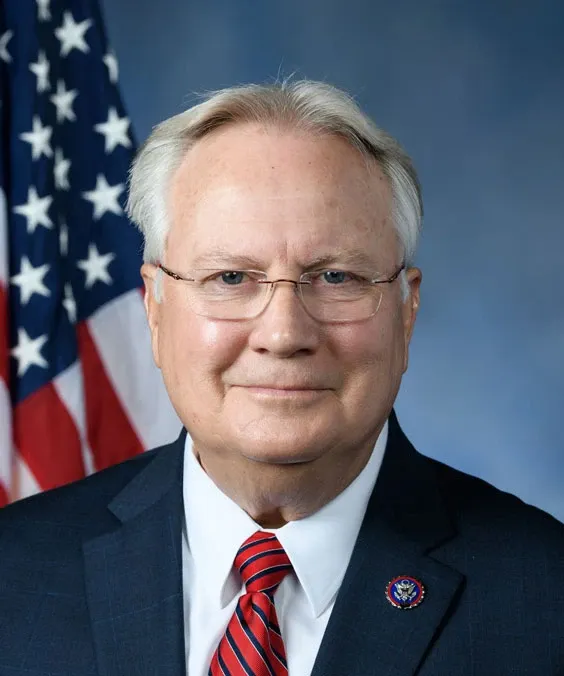
Roger Wicker
The Public Record
Roger Wicker is an American politician serving as the senior United States senator from Mississippi since 2008. A member of the Republican Party, Wicker previously served as a United States Representative from 1995 to 2008. Throughout his tenure, he has focused on issues such as national defense, economic development, and healthcare. Wicker has been involved in various legislative efforts and has held significant positions on committees, including the Senate Armed Services Committee.
Nov 26, 2018
The problem with the Arleigh Burke is she is full. We really do not have much room to expand or modernize her much beyond her current platform.
Nov 26, 2018
Mr. Secretary, you answered Senator Kaine's question about the troubling issue of the advanced weapons elevators.
Nov 26, 2018
We do not want you to be alarmist. We do not want you to exaggerate and wave your arms.
Nov 26, 2018
But the 355 is the minimum under a scenario where things were dangerous, but actually less dangerous than they are right now.
Nov 26, 2018
A 355-ship fleet is not some best-case ideal that we would like to achieve if everything goes well.
Nov 26, 2018
The challenges--I think his statement was that they are more dynamic, and you certainly agree with that.
Nov 26, 2018
I view that as unthinkable, and it would be irresponsible on the part of this Congress.
Nov 26, 2018
It was a bipartisan achievement, and I am I proud to have been part of this team.
Nov 14, 2018
Reclaiming my time, I thank the Senator from Florida for making those points and for his leadership as ranking member of the Commerce Committee. In this regard, I suggest the vote coming up soon will be probably as lopsided as the one on…
Oct 10, 2018
Why is that important, and can you discuss the impact that these national security cutters have on the Coast Guard's efforts to carry out its core missions?
Oct 9, 2018
Now, we also have a right to be proud of the fact that we have been able to delist the Louisiana black bear.
Oct 9, 2018
In essence, Commissioner Gibson is writing to support Chairman Barrasso's efforts to bring transparency and State input back into the consideration of endangered species.
Oct 9, 2018
I would like to see the United States offer an alternative that has strong baseline protections.
Oct 9, 2018
The goal was and is to have one set of privacy rules that are interpreted in a uniform way throughout the continent.
Oct 3, 2018
The ability to produce additional resources from existing land with more data that is available than ever before.
Oct 3, 2018
That's certainly the apprehension that I have and I think a lot of Members of Congress have.
Oct 3, 2018
We've tried to work with them. We want to make sure that we respect their prerogatives in this.
Oct 3, 2018
There is an efficiency aspect to this need, that there is an American productivity aspect to this need, and also there's a very important environmental aspect to this need.
Politicians like Roger Wicker