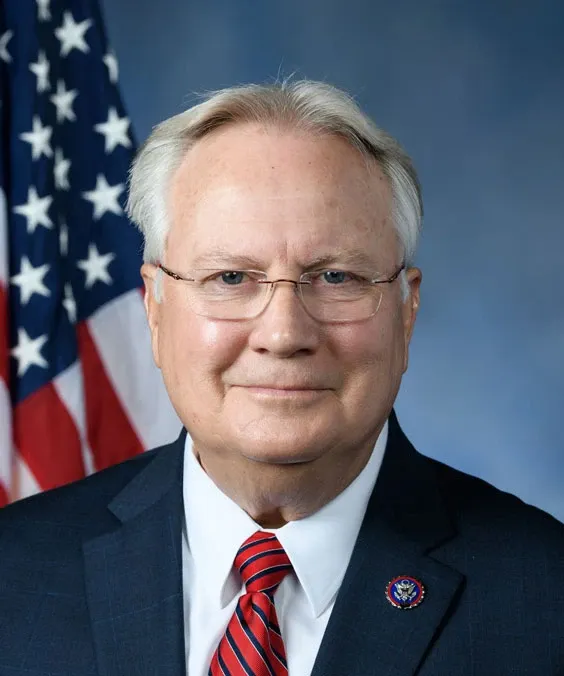
Roger Wicker
The Public Record
Roger Wicker is an American politician serving as the senior United States senator from Mississippi since 2008. A member of the Republican Party, Wicker previously served as a United States Representative from 1995 to 2008. Throughout his tenure, he has focused on issues such as national defense, economic development, and healthcare. Wicker has been involved in various legislative efforts and has held significant positions on committees, including the Senate Armed Services Committee.
Jul 13, 2009
Mr. Vladeck, was the FTC involved with the Postal Service in that specific incident?
Jun 17, 2009
Our long-term success against terrorism will depend on our ability to engage civilian populations through non-kinetic means and to win the war of ideas, rather than relying solely on direct action operations.
Jun 17, 2009
No. SOCOM is a force provider of SOF in response to requirements forwarded by Commander, CENTCOM. There is now insufficient SOF available to meet the demand.
Jun 17, 2009
our assessments indicate that SOF cannot grow more than 3 to 5 percent per year . . . and this growth rate will not meet the appetite for the effects of SOF in forward operating areas.
Jun 17, 2009
Special Operations Forces (SOF) are playing an integral role in our struggle against terrorism in both Iraq and Afghanistan.
Jun 17, 2009
I look forward to the Admiral testifying and answering questions concerning a wide range of issues, such as long-term sustainability.
Jun 17, 2009
We in Congress take our obligation to these servicemembers seriously and I look forward to working with you to ensure they continue to be the best-equipped and best-trained fighting force in the world.
Jun 17, 2009
I think we're all agreed it's more than language proficiency that is needed; it's understanding that, in some cultures, and some countries, 'I'll think about it,' really means, 'No way.'
Jun 17, 2009
Please describe why you view these proposals, specifically the request to 'coordinate on Military DOD and Service personnel management policy and plans' as necessary to the readiness of SOCOM forces.
Jun 17, 2009
it is vital the drafting of this document is informed by the candid contributions of its stakeholders.
Jun 17, 2009
It seems that there is no quick and easy answer to mitigating the stress on our SOF.
Jun 17, 2009
Admiral Olson, do you believe the current development and acquisition capacity of SOCOM is adequate to produce large, exceptionally complex platforms, such as a miniature submarine?
Jun 17, 2009
Admiral Olson, ASDS has been plagued by significant delays and cost overruns since its inception over 15 years ago.
Jun 17, 2009
Do you see that we are doing what we need to address that problem? Do you ever see us getting back to a situation where the skills are more widely spread?
Jun 17, 2009
Senator Wicker, the necessity of creating sustainable, long-term conditions for stability in foreign countries requires significant coordination between our military and civilian agencies.
Jun 17, 2009
Admiral Olson, do you foresee any reforms necessary to creating this capacity?
Jun 17, 2009
I have full confidence that General McChrystal's 60 day assessment will result in both an appropriate weighting of priorities for support and increase enabler support to SOF in Afghanistan.
Jun 17, 2009
This report was critical of your command's management of nearly $1.7 billion in logistic support contracts spanning 20 locations.
Jun 16, 2009
I think the wireless market was always held up at the FCC as a poster child for competition and a light touch approach to regulation.
Jun 16, 2009
Are they going to be able to survive? And will that be good for competitiveness?
Jun 16, 2009
Before I ask a question, of course we're always glad to see witnesses come from the various states.
Jun 15, 2009
Yes. Gentlemen, on the 313-ship fleet, we're really just giving lipservice to that, aren't we?
Jun 10, 2009
There's a widely held view... that if China really had the resolve to squeeze their North Korean neighbor on the issue of denuclearization, they could accomplish this in a way that really no other country on the globe can do.
Jun 10, 2009
It's clear to me that you're quite satisfied at this point with the response of the Chinese Government in response to these two tests.
Politicians like Roger Wicker