Harry Truman
The Public Record
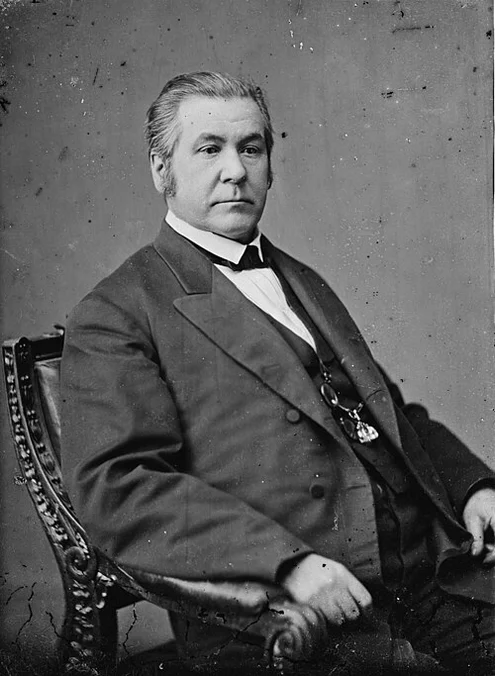
Harry S. Truman was the 33rd President of the United States, serving from April 12, 1945, to January 20, 1953. A member of the Democratic Party, he assumed the presidency after the death of Franklin D. Roosevelt. Truman is known for his decisive leadership during the final months of World War II, including the controversial decision to use atomic bombs on Hiroshima and Nagasaki, which contributed to Japan's surrender. He also played a significant role in the early stages of the Cold War, implementing the Truman Doctrine to contain communism and establishing NATO.
Aug 28, 1950
It is clear that we could not possibly make available the installations and trained military manpower to put a universal training program into operation at this time or in the immediately foreseeable future.
Aug 28, 1950
It does not seem to me immediately necessary for the Congress to enact universal training legislation.
Aug 28, 1950
You will understand why my action of the 26th in directing the withdrawal of your message to the Veterans of Foreign Wars was necessary.
Aug 28, 1950
Accordingly, I hope that your Committee will continue its active consideration of this legislation with a view to seeking final action on it in January.
Aug 28, 1950
The record will show that for the past five years I have repeatedly recommended that the Congress enact legislation of this character.
Aug 27, 1950
This order shall not be applicable to (a) postmasters; (b) rural carriers...
Aug 26, 1950
We have no designs on Formosa, and our action was not inspired by any desire to acquire a special position for the United States.
Aug 26, 1950
These seven points accurately record the position of the United States.
Aug 26, 1950
The United States has not encroached on the territory of China, nor has the United States taken aggressive action against China.
Aug 26, 1950
The action of the United States was an impartial neutralizing action addressed both to the forces on Formosa and to those on the mainland.
Aug 26, 1950
In the forthcoming discussion of the problem in the Security Council you will continue to have my complete support.
Aug 26, 1950
If the Security Council wishes to study the question of Formosa we shall support and assist that study.
Aug 25, 1950
This action by the United States will at least be a deterrent to the rulers of certain countries who consider genocide a justifiable means to promote their political objectives.
Aug 25, 1950
This tragic situation brings out the need for the free and civilized nations of the world to cooperate in outlawing this shocking crime of deliberate extermination of entire national, ethnical, racial or religious groups.
Aug 25, 1950
I also regard speedy ratification of the Genocide Convention as essential to the effective maintenance of our leadership of the free and civilized nations of the world in the present struggle against the forces of aggression and barbarism.
Aug 25, 1950
In ratifying the Genocide Convention, we will let the world know that the United States does not condone mass atrocities any more now than in the past, and we will indorse the principle that such conduct is criminal under international law.
Aug 23, 1950
There is nothing certain on prophecies for military maneuvers. I have no comment to make on that question.
Aug 23, 1950
Well, I will spell it for you--D-o-n-n-e-l-l-y. You know how to spell 'Walter,' don't you?
Aug 23, 1950
It is customary for Congressmen, when they are running for office, to write letters to the President and give them to the press long before he ever receives them.
Politicians like Harry Truman