Dec 16, 2009
I have a sneaking suspicion, and maybe I am being cynical, that it is easier to get money in the budget for CERP than it is for USAID.
The Public Record
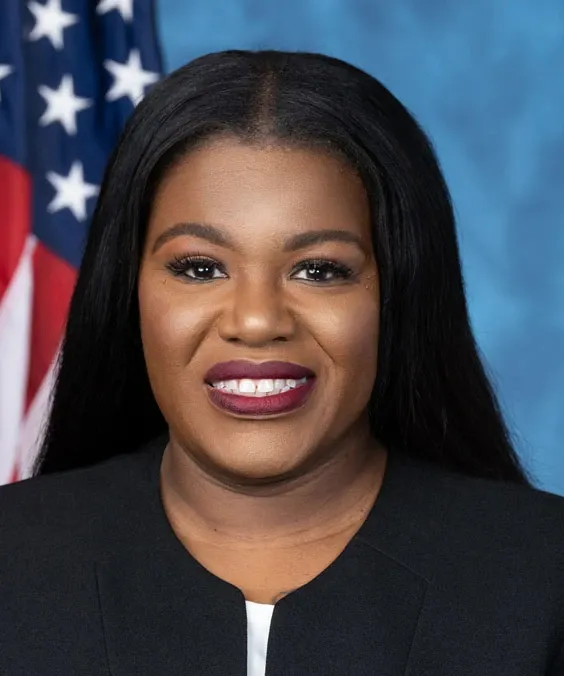
Claire McCaskill is an American politician and attorney who served as the United States Senator from Missouri from 2007 to 2019. She was the first woman elected to the Senate from Missouri. A member of the Democratic Party, McCaskill focused on issues such as healthcare, military support, and government accountability during her tenure in the Senate. She played a significant role in various legislative efforts and was known for her outspoken views on military contracting and defense spending.
I have a sneaking suspicion, and maybe I am being cynical, that it is easier to get money in the budget for CERP than it is for USAID.
Frankly, if you are holding off to make sure that you have the correct security environment, that is progress over Iraq because we did not hold off in Iraq and almost everything we built got blown up.
I believe that we will end up spending as much or more on contracting in Afghanistan as we spend on our military.
I want to make sure that even if you want to continue to try to get CERP money in the budget, I want to make sure you are not duplicating the expertise at USAID in order to spend it because that truly is a waste of money.
The only other question I had that I didn't get a chance to ask... was about award fees.
I would be disappointed if this Administration didn't go further down this path of effectiveness.
I am not against contractors or privatization. I am against doing it in a way that we can never, ever, ever know whether we are getting a bang for our buck.
I did get a spreadsheet and I have been trying to figure out how many contractors there are in DHS.
I would like to thank the Chairman Udall and Ranking Member Burr for holding this hearing on S.760.
I think we have to remember that he made the best choice among a lot of bad choices.
We had foreign repair stations doing significant work on some of our airlines in countries that were on the State Department's terrorist watch list.
Congress has provided $1.6 billion to the Department of Defense (DOD) for CERP in Afghanistan.
We're not really sure why we don't have the same kind of standards at foreign repair stations, in terms of background checks, in terms of perimeter security.
how are large-scale CERP projects vetted within the greater framework of reconstruction in Afghanistan to ensure their utility and prevent duplication or unneeded projects?
I am hopeful that you all are looking at the security clearinghouse contracting issue as it relates to a recompete.
the most important part of this mission is to add to the police and the army.
I think this has been a sole source for way too long, and I think we're paying more than we need to pay.
What about on our other kinds of contracts? What about the LOGCAP contract and all the people that are being hired in terms of moving supplies and food and all of those services? How are we addressing this pay disparity, that they're…
I appreciate your service, and I appreciate how hard you have worked at coming up with the best answer among a list of very bad choices.
What I am worried about is that there was testimony this summer that we had 600 oversight positions vacant in Iraq and Afghanistan.
I think there's going to be some problems if you don't stay joined at the hip on this particularly.
We have to do a better job coordinating with, not just our friends at DOD, but all the other government agencies.
what do you feel is an acceptable cost limit that should be in place on the type of CERP projects that field managers could implement?
Politicians like Claire McCaskill