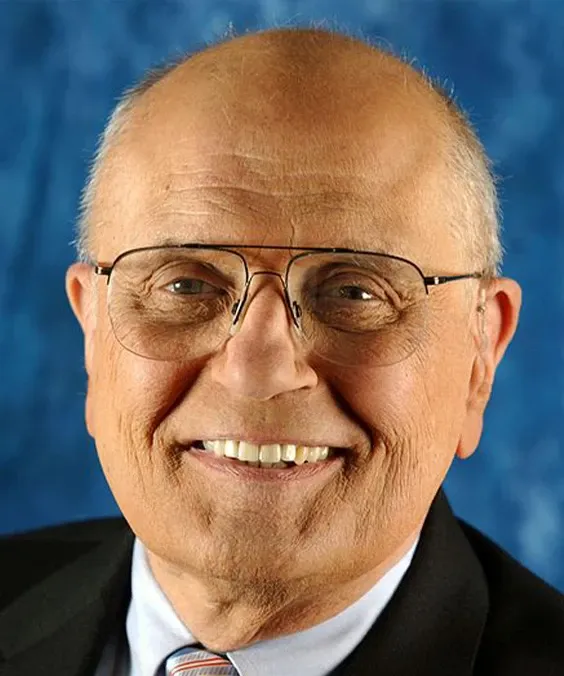
May 5, 2017
Hopefully we can revisit some of those matching programs to make sure that those communities that may be at the highest risk...
The Public Record
Gary Charles Peters is an American politician serving as the junior United States Senator from Michigan since January 6, 2015. A member of the Democratic Party, Peters previously represented Michigan's 14th congressional district in the U.S. House of Representatives from January 3, 2013, to January 6, 2015. Throughout his career, he has focused on issues such as economic development, healthcare, and education reform. Peters has been an advocate for bipartisan cooperation in Congress, emphasizing the need for compromise among lawmakers to address pressing national issues.
Hopefully we can revisit some of those matching programs to make sure that those communities that may be at the highest risk...
I think you need to have the same kind of contracting demonstration project that is put in place.
I would say, though, that the Air Force has done a pretty good job in terms of supporting the lab.
I was unable to attend yesterday's vote on the nomination of R. Alexander Acosta to be Secretary of Labor. Had I been able to attend, I would have opposed the nomination. ____________________
I think that the principles that we would think about are reciprocity--are American companies able to sell into that market?
It's global, but there are also a small number of players and it seems like because there are a small number of players that you're also more susceptible to potential anti-competitive behavior by other countries and their programs.
I think it would be devastating to the Station, in my understanding, was initially created as a mechanism to do two or three or four different kinds of things.
I am also concerned about, in the President's budget, significant cuts to NOAA and what that would mean for weather satellites.
It is very important to have collaboration between the Department of Defense and NOAA.
I want to draw attention to the issue in the duplication report about the challenges that we face in maintaining some of our satellite weather monitoring capabilities.
I think there is a great opportunity for us to come together to make sure that what we have seen in performance continues.
I would like to join in your efforts to get greater compliance with these GAO recommendations as well.
I am encouraged to hear that the $75 billion figure that we have been given is soon to grow quite rapidly.
It seems to me, between us and China, that this is a new paradigm when it comes to international relations.
To me, the title speaks for itself as 'essential.' This is the Essential Air Service for our rural areas.
I was floored to have the Trump administration basically zeroing out this money.
Your opposition to the border tax, if that is taken out, the math does not work real well for the tax plan.
The triple-A credit of the United States is the bedrock of the global financial system.
This is all games that they play, and they go back and forth, and it is just another example of the dysfunction that exists in the U.S. Congress.
Politicians like Gary Peters