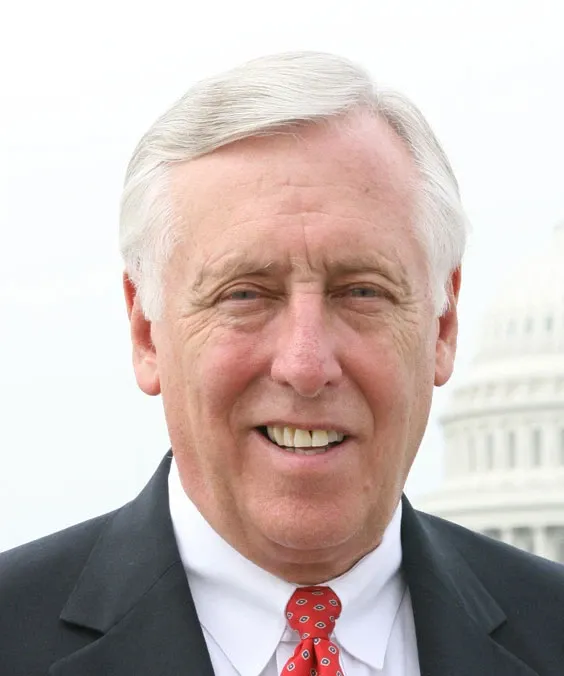
John Sarbanes
The Public Record
John Peter Spyros Sarbanes is an American politician serving as a member of the United States House of Representatives from Maryland's 3rd congressional district since 2007. A member of the Democratic Party, Sarbanes has focused on issues such as campaign finance reform, healthcare, and education during his tenure in Congress. He has been an advocate for transparency in government and has worked to strengthen the Voting Rights Act.
Sep 2, 2013
I have supported strongly the efforts to connect young people to nature across the country.
Sep 2, 2013
No one is doing more nationally for any treasure of the kind like the Chesapeake Bay than Senator Cardin is.
Sep 2, 2013
You need that national perspective because there are things that nature crosses State lines.
Jul 31, 2013
The question I wanted to ask you is, I guess there are three categories of States in terms of how they have responded to the challenge of the exchanges.
Jul 31, 2013
You look at the reduction in out-of-pocket expenses because we have eliminated some copayments for our seniors for certain kinds of preventive screenings and other things.
Jul 31, 2013
The stuff that the Affordable Care Act contain that has already taken effect actually are working pretty well, like keeping young people on their parents' insurance coverage until age 26.
Jul 31, 2013
I think our colleagues on the other side of the aisle are in a difficult place right now because they know that if this works it is going to do really great things for their constituents.
Jul 7, 2013
If you cut Medicaid, that is essentially cutting jobs. Medicaid stimulates the economy.
Jul 7, 2013
The Affordable Care Act, as we know, includes an expansion of the Medicaid program to include more low-income adults.
Jul 7, 2013
We are talking about a program that covers children and adults with disabilities, and pays for nearly half of all long-term care services.
Jul 7, 2013
Medicaid is an important program. We view it as a critical safety net that provides healthcare coverage for those individuals who have been shut out of private insurance.
Jun 19, 2013
My hope, as I yield back my time, is that we can strike the right balance so that it is cost effective to pursue a number of these different opportunities and that we can safeguard, as I said, public health and other concerns that we have.
May 15, 2013
I am gratified to hear the efforts that the new Bureau is undertaking in this area.
May 15, 2013
This is a really, really important hearing, given the demographic wave that is coming at us and how many seniors potentially are going to be exposed to these scams.
Apr 24, 2013
Lifeline is an essential to the success of our country because it ensures that even the most unserved areas are safe, able to communicate, and included.
Apr 24, 2013
Vermont is included, Representative Welch, and California has opted out of this new order last year.
Apr 17, 2013
What is happening, I think, is, as they focus in on something about which they got a lot of misinformation over time, they are discovering to their relief that there really is a lot of support there for small businesses.
Apr 10, 2013
Could you just talk a little bit about the relationship between the proposed benefit design change that would impose a higher cost-sharing impact on a patient for a lower-value service and a lower cost share for a higher-value service...
Apr 9, 2013
If you build an environment in which it is easier to access these opportunities than not, you will start to get the sort of engagement and traction that we want to see.
Apr 9, 2013
I want to congratulate you and the Maryland Department of the Environment, the council that you are a member of, and Governor O'Malley, frankly, for the commitment that is being made to that.
Apr 9, 2013
The two key factors are the charging station infrastructure, and the range anxiety. And they are interrelated.
Politicians like John Sarbanes