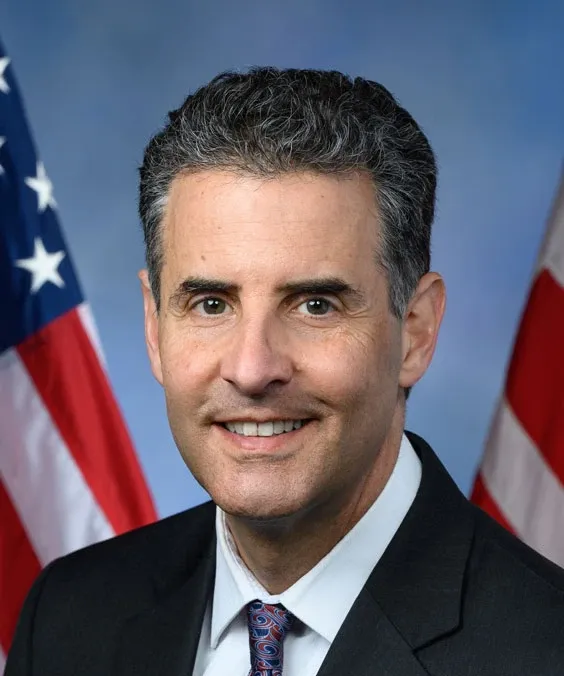
Nov 30, 2021
The reality is, if it is not economically feasible because of the competitive disadvantage that it does put additional challenges on operating safely.
The Public Record
Ben Cardin is a United States Senator from Maryland, serving since January 4, 2007. A member of the Democratic Party, he has focused on issues such as healthcare, education, and civil rights throughout his political career. Prior to his tenure in the Senate, Cardin served in the U.S. House of Representatives from January 3, 1987, to January 3, 2007, where he was known for his work on tax policy and social security reform.
The reality is, if it is not economically feasible because of the competitive disadvantage that it does put additional challenges on operating safely.
Nuclear power has not enjoyed the same type of tax incentives as other energy sources.
We want you to have the brightest minds coming out of our universities that are going to help us deal with the new technologies in nuclear power.
I would just ask for your commitment that you would work with us and our staffs as we identify countries and individuals that we believe need to be considered for these types of sanctions.
If we do not have U.S. leadership there is not going to be leadership in our hemisphere.
Our hemisphere has always bragged about having democratic states and, yet, in recent decades we have seen a decline of democracy.
It really is a critical moment, and I was listening to your response and I understand that you are collecting information.
I agree with you that we need to have the programs in place to support democracy and democratic institutions.
To me, the sanction that has gotten the most international attention is the Magnitsky sanction.
Lessons learned, as I see it, is that we have to have a strategy to make sure that our engagement does not reinforce the greed of corrupt leaders, and that was, I think, absent in Afghanistan.
Yes, beautiful area. Of course, that area right now is starting to get developed.
Thank you for your public service, and thank you for your willingness to serve in this critically important position.
I thought you might, because I have heard numbers as high as 2,000 that are needed.
My observations over the years, and we have had committee testimony to this effect, is that other nations are now investing more in their sort of Foreign Service professionals than we are.
Senator Hagerty's observation as an ambassador has been reinforced by a lot of what I have heard as I have traveled to different missions around the world.
I wanted to ask you first about the Foreign Service Institute as an institution and whether there are lessons to be learned...
There is a cultural problem within the State Department and this committee, the Senate Foreign Relations Committee, has the responsibility of oversight, of establishing the correct policy.
This is exactly what the Senate Foreign Relations Committee should be doing on oversight.
It would have been much more effective if you would have used the Naval Academy as the example rather than West Point.
We are getting very close to passing legislation that will set up a tier rating system.
Politicians like Ben Cardin