Jul 20, 2009
Robust clean energy and climate legislation will transform the American economy.
The Public Record
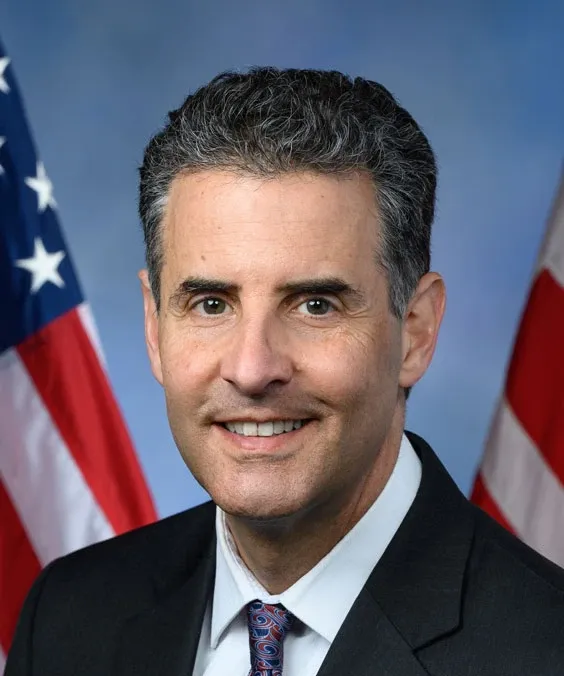
Ben Cardin is a United States Senator from Maryland, serving since January 4, 2007. A member of the Democratic Party, he has focused on issues such as healthcare, education, and civil rights throughout his political career. Prior to his tenure in the Senate, Cardin served in the U.S. House of Representatives from January 3, 1987, to January 3, 2007, where he was known for his work on tax policy and social security reform.
Robust clean energy and climate legislation will transform the American economy.
One of our prime tests in moving forward with energy legislation and environmental legislation is not just energy security for America... but we also need to keep jobs and create jobs in America.
The problem is that we have allowed the jobs to be exported overseas because we have not had the right incentives in America for the creation of clean jobs here in our own country.
Second, I think there needs to be more attention paid to it. That is, those states that are saying they're doing one thing, but in fact are not doing that.
I would just make a couple of suggestions. First, I think we should evaluate the technical assistance that we provide to countries to comply with the EITI.
One thing is clear. Many of the countries in the world that have some of the highest levels of poverty among their citizens also have mineral wealth.
This park will allow young people and everyone to know more about this remarkable woman.
I thank you very much for the opportunity of testifying in support of S. 227, the Harriet Tubman National Historical Park and Harriet Tubman Underground Railroad National Historical Park Act.
Rising sea levels and increased salt water infiltration into groundwater sources are serious concerns of mine.
A 2 percent increase in global temperature can create significant heat stress for plants and animals.
Every single time we have moved forward to go after pollution, the naysayers have been wrong about their predictions.
It is no coincidence that both our transportation and energy infrastructure systems are simultaneously at a crossroads.
Madam Chairman, thank you for holding this hearing on the transportation piece of the greenhouse gas emissions puzzle and what we can do to address this issue.
That is why the recovery law that we passed, and President Obama signed, contains more than $8 billion for high-speed rail.
We are working on the Chesapeake Bay reauthorization, looking for more effective ways to enforce the goals that are established by the local governments.
I know that Senator Levin is working on a reauthorization under the Clean Water Act of the Great Lakes.
We, in this region, look at the Chesapeake Bay partnership with the Federal Government as an area of major national priority, but also a model that could be used in other parts of the country where you have multi-jurisdictional issues.
We need to do more to empower regional approaches to dealing with these issues.
Well, what worries me is that, if you are correct, that this all of a sudden you see a huge increase
The related issue is that there is an intentional introduction of an invasive species, the Asian oyster
Politicians like Ben Cardin