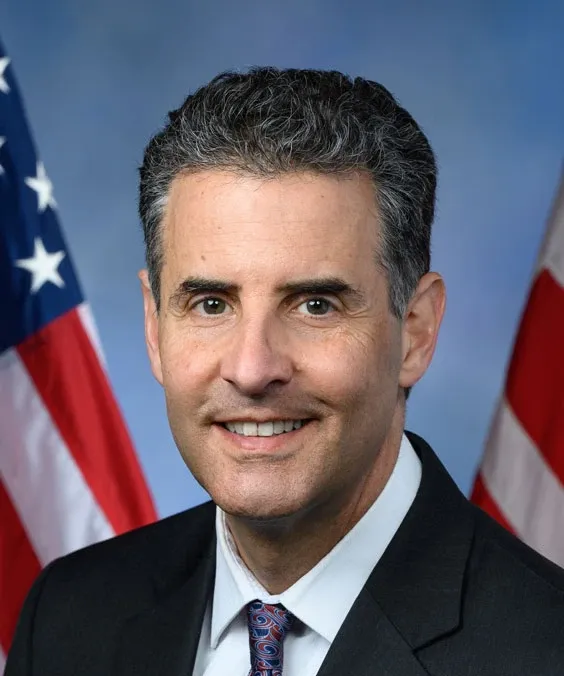
Ben Cardin
The Public Record
Ben Cardin is a United States Senator from Maryland, serving since January 4, 2007. A member of the Democratic Party, he has focused on issues such as healthcare, education, and civil rights throughout his political career. Prior to his tenure in the Senate, Cardin served in the U.S. House of Representatives from January 3, 1987, to January 3, 2007, where he was known for his work on tax policy and social security reform.
Jun 22, 2022
The prospects for effective action within the Security Council itself on the situation in Ukraine are limited by Russia's veto power.
Jun 22, 2022
The United States remains committed to strengthening our partnership with Hungary, where we believe the threats to democracy are real and merit our determined attention.
Jun 22, 2022
I am committed to supporting Ukraine and holding Russian President Vladimir Putin and his government to account across international fora.
Jun 22, 2022
I just really want to underscore the importance for the U.S. Embassy to be a refuge for the human rights defenders within Hungary.
Jun 22, 2022
I think your background in regards to war crimes is something that could be extremely helpful to us as we look at the challenges that we have in regards to holding Russia accountable for its activities in Ukraine.
Jun 22, 2022
This funding request is critical to achieving the Administration's climate goals and reaching the $11.4 billion annual climate finance goal laid out by the President.
Jun 21, 2022
He is, obviously, watching very closely what is happening with Sweden and Finland.
Jun 21, 2022
We are, today, concerned about the expansion as it relates to Finland and Sweden, but we also need to be concerned of the focus in the Black Sea.
Jun 21, 2022
We certainly urge that we have to make sure that that is constructive and timely.
Jun 14, 2022
I am very proud to partner with Senator Graham on the Coastal Habitat Conservation Act.
Jun 14, 2022
One of the things I really enjoy about this Committee is that we do work together, Democrats and Republicans.
Jun 7, 2022
The current high-skilled visa program needs to be reformed so that we are selecting those that possess the highest skills needed to grow our economy.
Jun 7, 2022
Those who did not receive it are having a much more difficult time competing.
Jun 7, 2022
We do not want the abuse of Interpol to, essentially, go after dissidents or even just everyday Syrians living abroad--expatriates--pressured by the regime.
Jun 7, 2022
I would suggest that the timing on some of these issues could very well be impacted by the--what is happening in the region as far as Assad being welcomed in other countries.
Jun 7, 2022
Lastly, let me just underscore we have a lot of tools at our disposal, including enhanced sanctions and other ways that we can express our concerns about the continued conduct of the Assad regime.
Jun 6, 2022
The sanctions to really work against Russia. The number-one priority here is to cut off the money for the war machine in Russia.
Jun 6, 2022
For the life of me, I could never understand why Germany went forward with Nord Stream 2 from the beginning.
Politicians like Ben Cardin