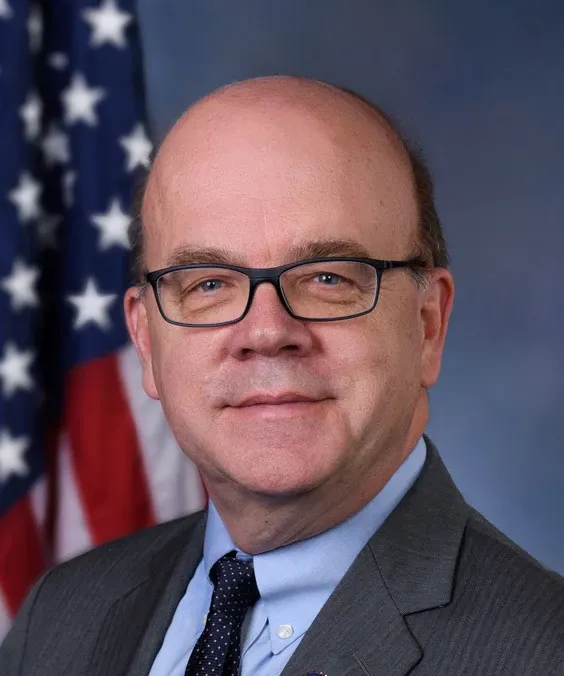
John Kerry
The Public Record
John Kerry is a prominent Democratic politician from Massachusetts who served as the 68th Secretary of State from February 2013 to January 2017 under President Barack Obama. Prior to his role as Secretary of State, Kerry was a United States Senator, representing Massachusetts from January 1985 until June 2013. During his time in the Senate, he was known for his work on foreign relations, environmental issues, and healthcare reform. He played a significant role in the negotiation of the Paris Agreement on climate change, emphasizing the importance of international cooperation in addressing global challenges.
Apr 16, 2013
I am deeply committed, I am working right now to close out my appointments, the President's appointments within the State Department with respect to our economic effort.
Apr 16, 2013
As Senator Lindsay Graham said very eloquently, America's investment in foreign policy is national security insurance.
Apr 16, 2013
I recently introduced the bipartisan Free Syria Act, which provides a comprehensive strategy to end the conflict in Syria.
Apr 16, 2013
However, the effects of sequestration, which I strongly opposed from the beginning, are leaving many State Department functions dangerously short of funds.
Apr 16, 2013
While I would have preferred to see higher funding levels for our diplomats, I will support the broad outline of the 2014 international affairs budget request.
Apr 12, 2013
If the threat disappears--i.e., North Korea denuclearizes--the same imperative does not exist at that point in time for us to have that kind of robust, forward-leaning posture of defense.
Apr 11, 2013
Kim Jong Un needs to understand, as I think he does, what the outcome of that conflict would be.
Apr 11, 2013
I am going to exercise the privilege of answering your question, Congressman.
Apr 11, 2013
This President... has done more to provide for the security of Israel than any other administration in history.
Apr 11, 2013
Our commitment to Israel is ironclad, and we just may occasionally have a difference of tactics.
Mar 31, 2013
President Barack Obama deployed some additional missile defense capability precisely because of the threat of North Korea.
Mar 31, 2013
Obviously if the threat disappears--i.e. North Korea denuclearizes--the same imperative does not exist at that point of time for us to have that kind of robust forward leaning posture of defense.
Mar 19, 2013
The finding is clear and unequivocal. We strongly urge other governments around the world--and particularly our partners in Europe--to take immediate action and to crack down on Hezbollah.
Mar 2, 2013
I said that any renationalization serves as a disincentive to international investment in Egypt.
Feb 28, 2013
The March 2013 elections represent an important next step in the process of political reform in Kenya.
Jan 30, 2013
The U.S. Government's unwavering support for the independence of these countries and their right to choose 'political, military, [and] economic' alliances 'free from coercion'.
Jan 22, 2013
We may not be able to prevent every single terrorist attack in the future, but we can--and we must--make sure that our embassies and employees, starting with those in high-risk, high-threat posts, are capable of withstanding such an attack.
Jan 22, 2013
It is my intention to work with the members of the committee and the State Department in the coming months on legislation that will improve security and better protect our employees.
Jan 22, 2013
Let me say that I respect what you have done during your tenure as Secretary of State in representing not only this Nation, but those in our Foreign Service who are on the diplomatic front lines in turbulent and dangerous parts of the…
Politicians like John Kerry