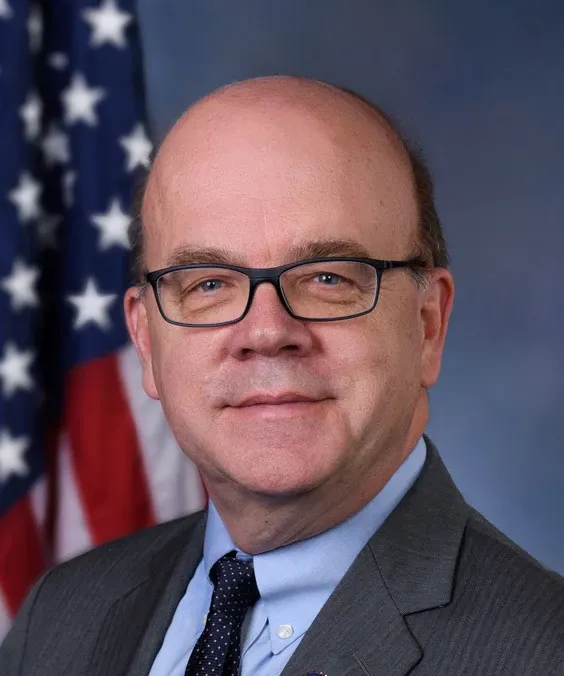
John Kerry
The Public Record
John Kerry is a prominent Democratic politician from Massachusetts who served as the 68th Secretary of State from February 2013 to January 2017 under President Barack Obama. Prior to his role as Secretary of State, Kerry was a United States Senator, representing Massachusetts from January 1985 until June 2013. During his time in the Senate, he was known for his work on foreign relations, environmental issues, and healthcare reform. He played a significant role in the negotiation of the Paris Agreement on climate change, emphasizing the importance of international cooperation in addressing global challenges.
Feb 23, 2015
But reestablishing diplomatic relations... will remove the pretext that has been used for decades, to counter pressure from the Cuban people for more freedom and economic prosperity.
Feb 23, 2015
President Obama made the right choice in saying that he was going to calibrate the early bombing in order to try to make certain that we had a government transition in Iraq that gave us a government we could work with.
Feb 23, 2015
I was in Nigeria to encourage the election process. I met with President Jonathan, with his opponent.
Feb 23, 2015
I don't think there is any disagreement here about strong support for the $3.1 billion in aid to Israel that is in this package.
Feb 23, 2015
Whether it's Serbia, Kosovo, Montenegro, Macedonia, other places--they are all in the firing line.
Feb 10, 2015
I will tell you what, I will commit to come to you with a program that will lay out, together with all of those folks you have just named, a stronger approach on this.
Feb 10, 2015
This agreement is not based on trust. No arms control agreement is based on trust.
Feb 10, 2015
We remain as deeply committed now as I was in the very beginning to trying to work something between the Palestinians and Israelis.
Feb 10, 2015
Historically, we have always said that politics should end at the water's edge when it comes to American foreign policy.
Feb 3, 2015
Governments can lead the way in ensuring that suppliers and contractors are held to the highest standards and adopt the highest standards.
Feb 2, 2015
Latin America is the first region in the developing world to commit itself to democracy.
Feb 2, 2015
Our commitment to democracy and human rights, and our desire and hope that the Cuban people will know the benefits of liberty and become the sovereigns of their own destiny, is no less for our action.
Feb 2, 2015
It is our determination that this kind of environment would be the most propitious to support the only legitimate agent of peaceful and enduring political change in Cuba: the Cuban people.
Feb 2, 2015
The U.S. Government will continue programs that promote the realization of human rights and fundamental freedoms such as freedoms of peaceful expression, association, and assembly in Cuba.
Feb 2, 2015
If I am right, and our new policy succeeds in empowering the Cuban people to shape their political destiny, then the Cuban Government may respond by cracking down harder in the short run.
Feb 2, 2015
We will spare no effort to ensure that everyone still detained for simply exercising their rights to freedom of expression, association, or peaceful assembly is free.
Feb 2, 2015
The most immediate result of this policy shift--the release from prison of 53 activists who are now back with their families and able to continue their brave work--is unambiguously a good thing.
Feb 2, 2015
Cuba remains a one-party state that tries to stifle virtually all political, cultural, and economic activity that it does not control.
Feb 2, 2015
The promotion of universal human rights and the empowerment of all Cubans must be the bedrock of our policy toward Cuba.
Feb 2, 2015
We will continue such talks only if they chart a course for concrete progress on human rights and democratic principles in Cuba.
Politicians like John Kerry