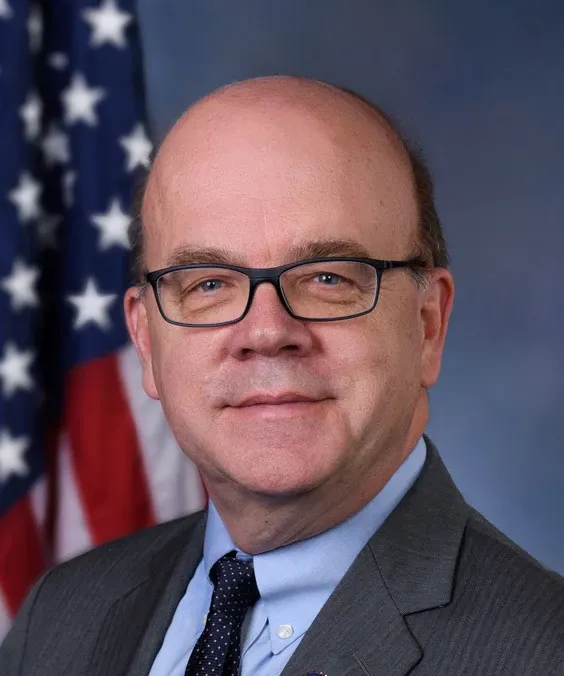
John Kerry
The Public Record
John Kerry is a prominent Democratic politician from Massachusetts who served as the 68th Secretary of State from February 2013 to January 2017 under President Barack Obama. Prior to his role as Secretary of State, Kerry was a United States Senator, representing Massachusetts from January 1985 until June 2013. During his time in the Senate, he was known for his work on foreign relations, environmental issues, and healthcare reform. He played a significant role in the negotiation of the Paris Agreement on climate change, emphasizing the importance of international cooperation in addressing global challenges.
May 5, 2009
If we're going to give up a long-held American position that we should not talk to Iran... then our partners... ought to be with us.
May 5, 2009
I think what President Obama has been trying to do... has been fairly impressive.
May 5, 2009
We could not have successfully prosecuted BCCI without the expertise and assistance of Senator Kerry
May 5, 2009
Our preference is engagement. Our preference is not to have confrontation of any kind, through sanctions or otherwise.
May 5, 2009
Iran's leaders must comply with the international community's requirements that its nuclear program is strictly for peaceful purposes.
May 5, 2009
I believe President Obama is 100 percent correct to open the door to direct talks with Iran.
May 5, 2009
Obviously, there are obstacles in our path as we pursue a new policy, but there are huge opportunities, and I want to emphasize the opportunities.
May 5, 2009
Let me just say that faced with a crowded field, the foreign policy challenges, we're here today to discuss one of the most complicated and important to all of us, and that is the question of how to engage with Iran and to prevent it from…
Apr 29, 2009
In the long term, the best way to eliminate piracy and extremism in and around Somalia is to help establish stability, the rule of law, and functional inclusive governance there.
Apr 29, 2009
It seems to me that actually, there is no law whatsoever that would prevent--
Apr 29, 2009
These attacks have claimed innocent lives and they've imposed a very significant financial cost on companies engaged in shipping.
Apr 29, 2009
Many people were not even aware of modern piracy; they thought of it largely as being contained to Southeast Asia.
Apr 27, 2009
The simple solution to this problem would be for the President to honor the Constitution and seek the prior approval of Congress.
Apr 27, 2009
The 1973 War Powers Resolution is an imperfect solution. However, it does retain Congress's critical role in this decisionmaking process.
Apr 27, 2009
This is not a legislative committee. You're not authorizing money. You are consulting with the President--that's your sole purpose--on the question of going to war.
Apr 27, 2009
I would make the point, Senator Kerry, that many people would argue that the President could do, anyway, some of the things that are listed in here as exemptions;
Apr 27, 2009
Under the Constitution, Congress has the power 'to declare war.' It is not ambiguous in any way.
Apr 27, 2009
The resolution, which today's witnesses recommend repealing, has been controversial ever since it was enacted over President Nixon's veto.
Apr 27, 2009
Uncertainty over Congress's role in two successive wars--Korea and then Vietnam--led to the passage of the War Powers Resolution in 1973.
Politicians like John Kerry