Mar 9, 2010
I strongly support the Global Health Initiative and its closely related--I'm so glad Senator Lugar mentioned this--food security efforts.
The Public Record
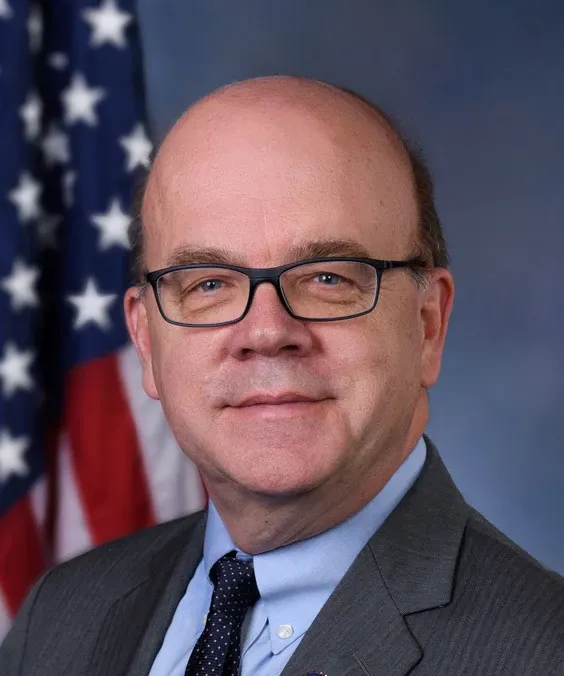
John Kerry is a prominent Democratic politician from Massachusetts who served as the 68th Secretary of State from February 2013 to January 2017 under President Barack Obama. Prior to his role as Secretary of State, Kerry was a United States Senator, representing Massachusetts from January 1985 until June 2013. During his time in the Senate, he was known for his work on foreign relations, environmental issues, and healthcare reform. He played a significant role in the negotiation of the Paris Agreement on climate change, emphasizing the importance of international cooperation in addressing global challenges.
I strongly support the Global Health Initiative and its closely related--I'm so glad Senator Lugar mentioned this--food security efforts.
Fighting HIV-AIDS has long been at the top of that list, and during a polarizing era in America's politics it's been the kind of bipartisan success story that defines our democracy at its best.
Today, thanks to these programs, over 2.4 million people are receiving life-saving treatment and nearly 350,000 babies of HIV-positive mothers have been born HIV-free.
As long as so many lives remain at risk, we can't rest on past accomplishments.
There couldn't be a more fertile field for the use of public diplomacy to achieve national security ends than Iran.
The task ahead is to tell the world the story of a good and compassionate nation.
I don't think there will be elections, because, in order to have elections, you need some form of agreement between Fatah and Hamas.
We need to change the status quo, and the status quo also means people living under occupation.
I believe he'll be the last to continue believing in them, if everyone else loses faith.
I'm in favor of direct talks, but I think, right now, to have proximity talks is not the worst we can do.
We need a new policy toward Gaza, a more energetic policy that opens it up to normal trade and traffic.
If we want to have peace between Israelis and Palestinians, I believe, today, moving toward peace between Israelis and Syrians is not an obstacle, it's a precondition.
The Obama administration, and the President himself, need to do a better job of talking to the Israeli people.
I believe there is a way to work with international organizations to get more construction material into Gaza in a way that empowers the Palestinian Authority, and not Hamas.
So, we all must encourage Palestinians in this peace effort, and that's why the Arab League decision was really so significant.
The Arab Peace Initiative, endorsed by every Arab country, provided another key piece of the final puzzle: the promise for Israel that a comprehensive peace agreement would bring normalized relations with the Arab world.
I have heard--in Pakistan, in Afghanistan, in Sudan, in other parts of the world--the constant drumbeat of the way the Palestinians are treated, and of Israel-Palestine relations.
The United States should stand for something. We carry weight. We are a major power, and yet our diplomacy sometimes doesn't conduct itself as a major power.
I think the following, though. Where I might, respectfully, disagree with you is to suggest that, if there's not external pressure of some kind, however we define that--it might be walking away--
I speak with great respect for President Obama and Senator George Mitchell, but also great disappointment over what can most gently be described as meager results of American diplomacy this past year.
We should also build regional and international support structures, including better use of the Arab Peace Initiative.
America has a vital role to play as an energetic and effective broker, ensuring that both sides make good-faith proposals that bring the parties closer to peace.
The fact is, most Israelis and Palestinians still recognize that a two-state solution remains the only workable solution and the only just solution.
Politicians like John Kerry