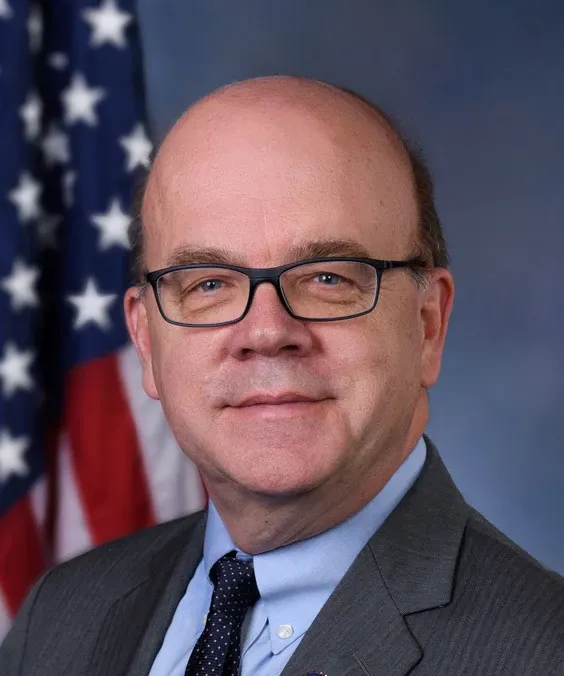
John Kerry
The Public Record
John Kerry is a prominent Democratic politician from Massachusetts who served as the 68th Secretary of State from February 2013 to January 2017 under President Barack Obama. Prior to his role as Secretary of State, Kerry was a United States Senator, representing Massachusetts from January 1985 until June 2013. During his time in the Senate, he was known for his work on foreign relations, environmental issues, and healthcare reform. He played a significant role in the negotiation of the Paris Agreement on climate change, emphasizing the importance of international cooperation in addressing global challenges.
May 18, 2011
What is the definition of that? What would be the standard be that would be applied to that?
May 18, 2011
To what degree is it true that right now, absent some kind of promise to the contrary, any kind of company or a mobile phone or an app operator, hotel, website, whatever it is, that they can do whatever they want with the personal…
May 18, 2011
I also want to commend Senator Kerry and Senator Klobuchar for their work on the Commercial Privacy Bill of Rights.
May 18, 2011
Last week, I introduced the Do-Not-Track online bill of 2011. I think that is a terrific bill.
May 18, 2011
These devices are not really phones, as Senator Kerry said. They are miniature computers.
May 18, 2011
We need to establish what we as a society, in a country that has always valued privacy, what we as a society believes is the sort of basic proper treatment of people's information.
May 18, 2011
I reject the notion that privacy protection is the enemy of innovation. It absolutely doesn't have to be and isn't.
May 18, 2011
We have, unfortunately, in the United States of America parenthetically, been going in the wrong direction.
May 18, 2011
We want to see this potential of the Internet unleashed all across the country as broadly as possible.
May 18, 2011
It is obviously one that attracts a lot of interest. It is a lot of money on the line, a lot of business, a lot of business practices, but also a lot of values, personal interests of Americans.
May 17, 2011
We support the bipartisan resolution drafted by Senators Kerry, McCain, Levin, Feinstein, Graham, Chambliss, and Lieberman.
May 16, 2011
I am optimistic that we can find a way forward that significantly changes the American footprint and secures our interests.
May 16, 2011
We owe it to them to develop a roadmap that allows us to responsibly transition to Afghan control.
May 16, 2011
I underscored the importance of seizing this moment to firmly reject an anti-American narrative that exploits our differences.
May 16, 2011
This relationship will not be measured by words, or by communiques after meetings... It will only be measured by actions.
May 16, 2011
It's clear to me that we need to be very careful and thoughtful, so that we get the policy right.
May 15, 2011
You need to decide what sort of country you're going to be, whether you're going to be a haven for terrorists.
May 11, 2011
The indications I have are that is broadly within the population, even people within the areas of Qadhafi control, they do not want him to stay and that there is a very broad-based Libyan people opposition to his presence.
May 11, 2011
I am convinced that because of the actions taken by NATO and by the GCC, by the Arab League, and the opposition themselves, I believe that the Libyan people have been given a fighting chance for a better future.
Politicians like John Kerry