Jun 3, 2019
We must also keep American companies accountable for their potential complicity in Chinese government censorship.
The Public Record
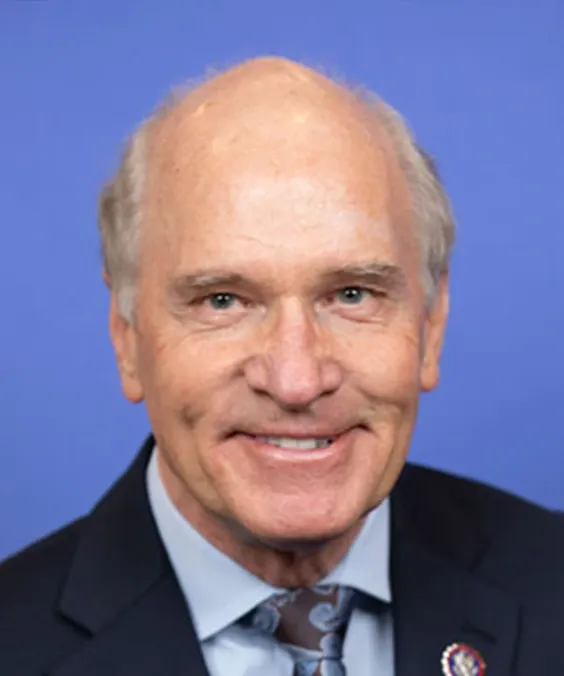
Jim McGovern is a Democratic member of the United States House of Representatives, representing Massachusetts's 2nd congressional district since 1997. He has been a strong advocate for issues such as hunger, human rights, and healthcare. Throughout his tenure, McGovern has focused on policies aimed at reducing food insecurity and promoting social justice. He has also been involved in various legislative efforts to improve access to healthcare for all Americans.
We must also keep American companies accountable for their potential complicity in Chinese government censorship.
Today we see an increasingly aggressive Chinese Communist government that is more repressive in domestic policy.
We must use opportunities like this to speak about the true story of the Tiananmen Square massacre.
What does it profit a country if it gains the whole world and suffers the loss of its soul?
The extradition law will replace Hong Kong's rule of law with rule by fear--as it is practiced in China.
We have fought very hard to preserve freedom and our way of life in Hong Kong since the handover 22 years ago this July.
I think it is a fair statement to say that whether you are a U.S. business interest or a Chinese business interest, you will lose money if this extradition agreement were to move forward.
We continue to call upon the Chinese and Hong Kong governments to restart the electoral reform process.
I think we can work on something that's a bipartisan statement that is even stronger than our Consul General's statement.
It could have a chilling impact in terms of whether or not Hong Kong is a friendly place to do business.
Xi Jinping tries to make every faith, every denomination from Falun Gong, to Christians, to Uyghurs, comport with Communist ideology or else.
There is no--despite the efforts by the American Bar Association and many others, there's no rule of law.
I think in your ominous warning in your opening comments that it will never be the same in Hong Kong should this extradition treaty go forward.
We stand together with the people of Hong Kong and indeed all the people of China when we express our concerns about the policies of the Chinese and Hong Kong governments.
There is not a lot we always all agree on. But we agree on the importance of human rights in Hong Kong.
In recent years there has been a steady erosion of Hong Kong's autonomy that was enshrined in the 'one country, two systems' framework.
The title of today's hearing is 'Hong Kong's Future in the Balance: Eroding Autonomy and Challenges to Human Rights.'
HONG KONG'S FUTURE IN THE BALANCE: ERODING AUTONOMY AND CHALLENGES TO HUMAN RIGHTS
Politicians like Jim McGovern