Apr 27, 2021
Like Congressman McGovern said, childhood hunger is completely solvable--completely solvable.
The Public Record
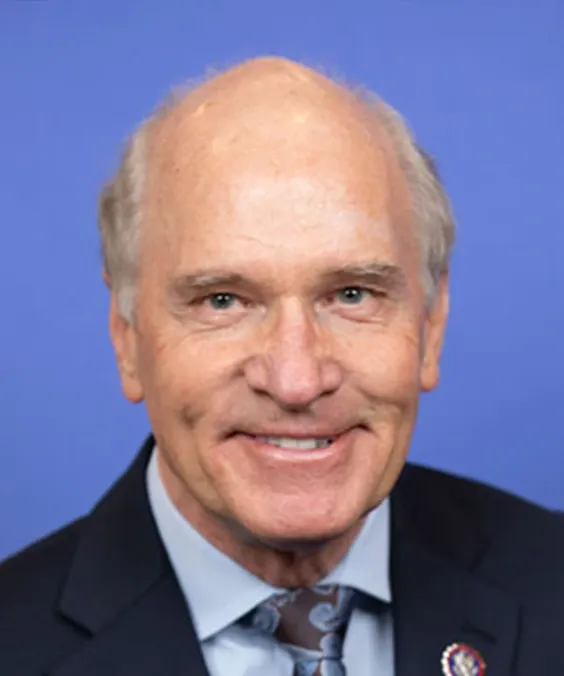
Jim McGovern is a Democratic member of the United States House of Representatives, representing Massachusetts's 2nd congressional district since 1997. He has been a strong advocate for issues such as hunger, human rights, and healthcare. Throughout his tenure, McGovern has focused on policies aimed at reducing food insecurity and promoting social justice. He has also been involved in various legislative efforts to improve access to healthcare for all Americans.
Like Congressman McGovern said, childhood hunger is completely solvable--completely solvable.
It is still not that little boy or the millions of people who face hunger today who should be ashamed. I am ashamed. We all should be ashamed.
I want to end my remarks by quoting someone I mentioned at the beginning, and that is Senator Bob Dole, a Republican from Kansas.
People used to say hunger is a nonpartisan issue, and I really want to stand here today... to say that we all need to be kid-partisan, without question.
As Chairman McGovern said earlier, you know, this is completely solvable, and the money is there.
In closing, ending hunger begins with the safety net, but it does not stop there.
Ending hunger will not happen through hunches, assumptions, and good intentions. Ending hunger will happen with evidence-based programs and policies.
The time has come for the promise of this Nation to be that no person goes hungry in America--no person, period--not on my watch, never again.
The challenge before us is great, but I believe this goal is in our grasp if we are willing to fight for it.
Ending hunger is not just about filling somebody's stomach up with whatever.
We will not be able to solve climate change. We will not be--our food insecurity will be heightened.
China is moving at a more rapid pace than we are, in terms of internet connection.
We have 24 million of our people not connected to the internet, which means, in the rural area, we have our farmers not connected to the internet.
We built broadband programs during the last farm bill which promote fast, future-proof networks that will stand the test of time.
There is this what I call moral cowardice that exists and has existed for some time.
Part of the problem is the executive branch wanting to take as much power as it can possibly get.
I do think that it is--that there are cases where the United States can stumble into wars that are mistaken wars.
I am not sure I would do it again because I never thought that that could be twisted and interpreted in so many different ways.
The process for how we wage war and establish peace in this country is broken. It is badly broken.
Politicians like Jim McGovern