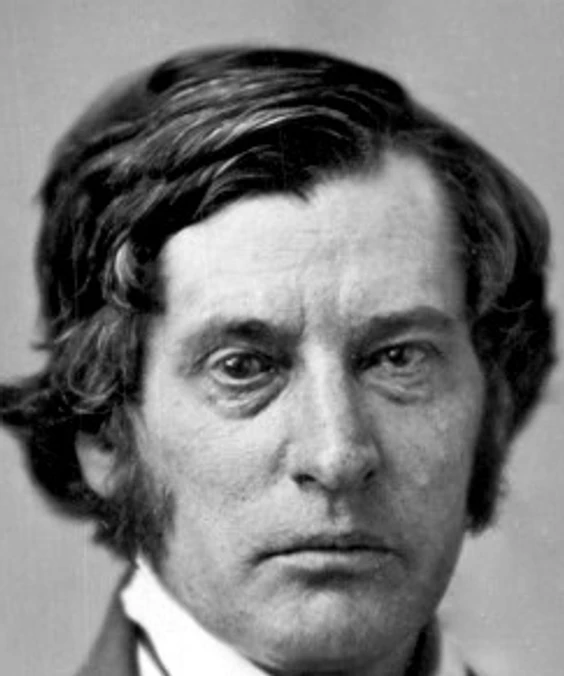
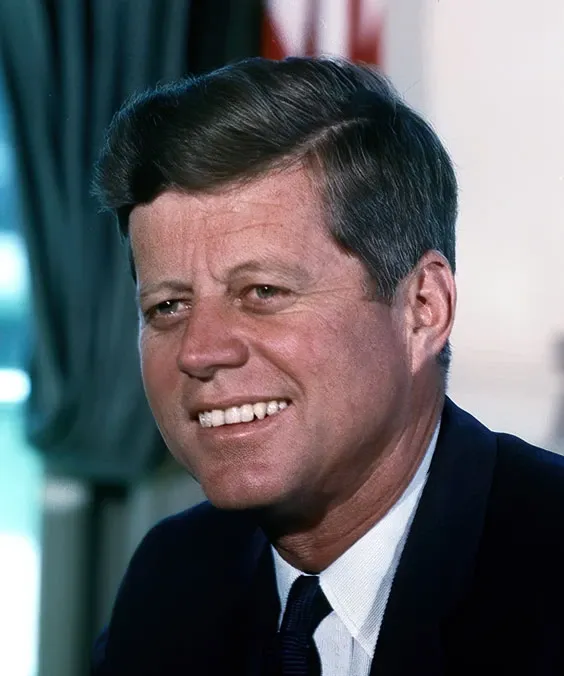
I suppose I may say without arrogance that I was the leader of the Free Soil Party in each House when I was a member of it.
George F. Hoar
The Public Record
gutenberg.org
I can honestly say with George Herbert: "I protest and I vow I even study thrift, and yet I am scarce able, with much ado, to make one half year's allowance shake hands with the other.
It was because upon one of the greatest questions of Constitutional law and Constitutional liberty that ever went to judgment, there could be found no single reason for the decision of the Court strong enough to convince any two judges.
The recent opinions of the Court in what are known as the Insular Cases have shocked the country and greatly diminished the weight and authority of the tribunal.
I do not believe any court can long retain public confidence and respect when nearly all its opinions in important matters are accompanied by a powerful attack on the soundness of the opinion and the correctness of the judgment from the…
I can conceive of no life more delightful than that of a lawyer in good health, and with good capacity, and with a sufficient clientage, spent in that manly emulation and honorable companionship.
The Supreme Court of Massachusetts at that day with Chief Justice Shaw at its head was without an equal in the country and not surpassed by the Supreme Court of the United States itself.
The difficult art of cross-examination, the more difficult art of refraining from cross-examination, can only be learned by watching men who are skilled in the active conduct of trials.
Study at a law school is invaluable to the youth if he is to rise in his profession; but there is no law school like a court-house when such men are conducting trials.
In the intimacy of that relation I got a knowledge of the inmost soul and heart of a class of men who I think constituted what was best in American citizenship, a knowledge which has been a great educational advantage to me and valuable in…
I do not think anybody, except the very intimate friends of Charles Francis Adams, was aware of his great abilities until he manifested them amid the difficulties of the English Mission.
He would undoubtedly have taken a very high place in the public and official life of his generation if he had found himself in accord with either of the great political parties.
But the Free Soil Party, of which the present Republican party is but the continuation under a change of name, determined that no person should receive its support for any national office, who himself continued his association with either…
The meeting which gathered at Worcester in pursuance of the above call, inaugurated for the first time a party for the sole object of resisting the extension of slavery.
He likened the case of the husband bound to an adulterous wife to the old Hebrew punishment of fastening a living man to a corpse.
The irrepressible conflict had to be fought out.
But if I am asked whether I will advise the convention at Philadelphia to nominate, or if nominated I will recommend the people to support for the office of President of the United States, a swearing, fighting, frontier colonel, I only say…
But I cannot see it to be my duty to join in a secession from the Whig Party for the purpose of putting Mr.
Van Buren to be essentially wrong, and it seems to me that in consenting to form a party under him Whigs must consent to bottom their party on one idea only, and also to adopt as the representative of that idea a head chosen on a strange…
I cannot concur even with my best friends in giving the lead in a great question to a notorious opponent to the cause.
Van Buren even on this very question of slavery, for I believe that General Taylor is an honest man and I am sure he is not so much committed on the wrong side, as I know Mr.
It is utterly impossible for me to support the Buffalo nomination.
You know, that as early as 1830 in my speech on Foote's resolution, I drew upon me the anger of enemies, and a regret of friends by what I said against slavery, and I hope that from that day to this my conduct has been consistent.
You are not one of them, my dear sir, but there are those who will not believe that I am an anti-slavery man unless I repeat the declaration once a week.
They have spoken with scorn and upbraiding of those Northern Democrats who would sacrifice the rights and interests of the Free States upon the altar of party subserviency.
Politicians like George F. Hoar