So it became clear to my mind, and to the minds of many other Republicans, that it was better to leave this matter to the returning and growing sense of justice of the people of the South than to have laws on this subject passed in one…
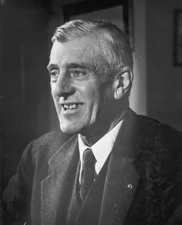
George F. Hoar
The Public Record
George Frisbie Hoar was a Republican lawyer and legislator from Massachusetts. He served in the U.S. House of Representatives from 1869 to 1877 and in the U.S. Senate from 1877 until his death in 1904.
gutenberg.org
So whenever the Democratic Party should come into power it was apparent that all the vigor would be taken out of the election laws.
They could not be expected, year after year, election after election, and perhaps generation after generation, to hold together by reason of this one question, differing on other things.
It was idle to expect Southern jurors, or State officers to enforce the law against such crimes in the condition of sentiment existing there.
Besides, no strictness of laws which provide only for the proceedings at the elections will secure their freedom if it be possible to intimidate the voters, especially men like the colored voters at the South, from attending the elections…
A complete system of education at the National charge was an essential element of the reconstruction policy.
But looking back now I do not believe that any other policy would have done as well as that has done, although a large part of what was designed by the Republican leaders of the period of reconstruction never was accomplished.
So the whole Republican Party of the North came to be united in the belief that there could be no security for the liberty of the freedman without the ballot.
Men were to be sold for the crime of being out of work.
They proceeded to pass laws which if carried out would have had the effect of reducing the negro once more to a condition of practical slavery.
But the white Democrats in the South were blind to their own interest.
I do not believe that self-government with universal suffrage could be maintained long in any Northern State, or in any country in the world, without ample provision for public education.
In my opinion this defeat accounts for the failure of the policy of reconstruction so far as it has failed.
It was never contemplated by them to give the right to vote to a large number of illiterate citizens, without ample provision for their education at the public charge.
There was to be no distinction in political rights by reason of color or race.
Their policy toward the colored people was simply the application to them of the principles applied to the whites, as set forth in the Declaration of Independence and in the Constitution of nearly every State in the Union.
All they demanded of the conquered was submission in good faith to the law of the land and the will of the people as it might be constitutionally declared.
I have no regret, and no desire to blot out anything I have said or done, or to change any vote I have given.
They are the opinions upon which the majority of the American people have acted, and the reasons which have controlled that action, seem to me now, in looking backward, to have been good reasons.
It was my fortune to have a good deal to do with maintaining the ancient honor of the Commonwealth and defending and vindicating the purity of her political organization.
Beside all these things there has been during a large part of my public service, especially the part immediately following the Civil War, a battle to maintain the purity of elections and the purity of administration and government…
The offices of trust and profit now exist to serve the people and not to bribe them.
The vast number of the National offices has ceased to be a menace to the safety of the Republic and has ceased to be a source of strength to the Administration in power, or to become the price or reward of political activity.
But the magnanimous American people preferred peace and reconciliation to revenge.
For the great offence committed against us by Great Britain in the hour of our peril we have exacted apology and reparation.
Politicians like George F. Hoar