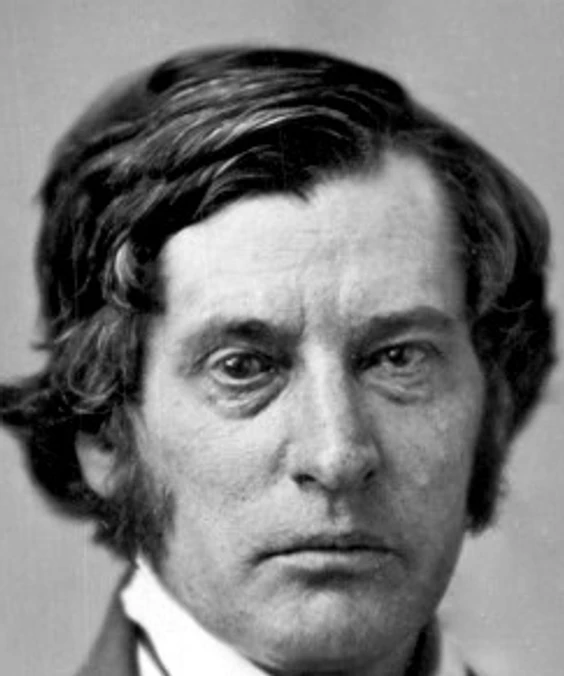
He never troubled himself about majorities or administrations, still less about crowds or mobs or spasms of popular excitement.
George F. Hoar
The Public Record
gutenberg.org
He never committed himself to the popular currents, nor studied the vanes to see how the winds were blowing, nor sounded the depths and the shallows before he decided on his own course.
He was contented to be responsible for one man; to cast his share of the vote of one State; to do his duty as he conceived it, and let other men do theirs as they saw it.
He never lost his good nature, his courage, or his supreme confidence in the final triumph of truth.
When Freedom, Righteousness and Justice were on his side he considered himself in the majority.
He was many times called upon to espouse unpopular causes and unpopular doctrines.
But with all his friendliness and kindliness, with all his great hold upon the love and respect of the people, with all his large circle of friends, with all his delight in companionship and agreeable converse, he dared to be alone.
His armor was his honest thought And simple truth his utmost skill.
He had no duplicity, no indirection, no diplomacy.
On any question involving righteousness or freedom you would as soon have had doubt of George Washington's position as of his.
In whatever assembly he was found he represented the solid sense of the meeting.
He would have been as competent to legislate for an entire continent so long as that legislation were to be governed, restrained, inspired by the principles in which our Union is founded and the maxims of the men who builded it.
He was in every respect as competent to legislate for fifty States as for thirteen.
His intellect and soul, his conceptions of statesmanship and of duty expanded as the country grew and as the demands upon him increased.
To his wise foresight is due the ample endowment of Agricultural or Technical colleges in every State in the Union.
Morrill deserves this expression of honor and gratitude at the hands of at least one great institution of learning in every American State.
There can be no more beautiful and enviable memorial to any man than a portrait upon the walls of a great college in the gallery where the figures and faces of its benefactors are collected.
Above all, the beautiful National Library building, unequalled among buildings of its class in the world, was in a large measure the result of his persistent effort and powerful influence, and stands as an enduring monument to his fame.
He conceived and accomplished the idea of consecrating the beautiful chamber of the old House of Representatives as a Memorial Hall where should stand forever the statues of the great men of the States.
To him is due the first antipolygamy bill, which inaugurated the policy under which, as we hope and believe, that great blot on our National life has been forever expunged.
To him is due the great tariff, that of 1861, which will always pass by his name, of which every protective tariff since has been but a modification and adjustment to conditions somewhat changed, conditions which in general, so far as they…
But he has left many a personal monument in our legislation, in the glory of which no others can rightfully claim to rival him.
Our acts our angels are, or good or ill; Our fatal shadows that walk by us still.
Man is his own star; and the soul that can Render an honest and a perfect man Commands all life, all influence, all fate; Nothing to him falls early or too late.
The Providence that governs this world leaves nations as He leaves men, to work out their own destiny, their own fate, in freedom, as they obey or disobey His will.
Politicians like George F. Hoar