Nor does it follow from any possible construction of the Constitution that it is wise and just for the American people to seize, through war, and to govern by force, the hostile tribes and peoples of the earth whether near to or remote.
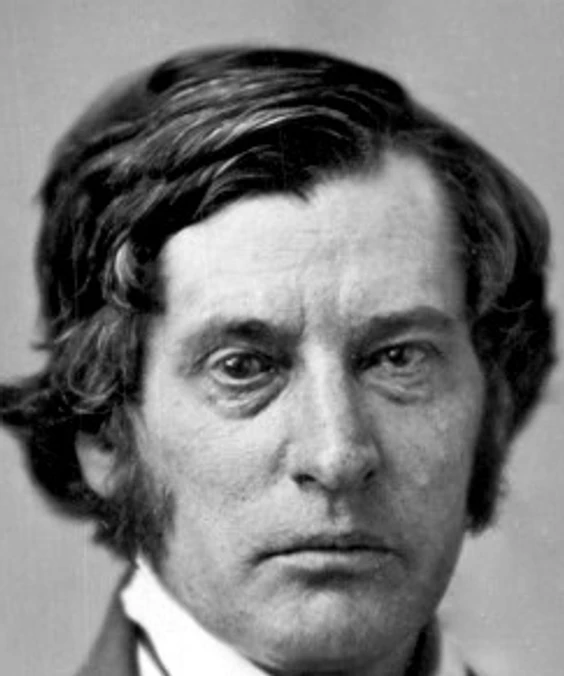
George Boutwell
The Public Record
United States politician (1818–1905)
gutenberg.org
The seriousness of this issue cannot be magnified by the art and skill of writers and speakers, nor can it be dwarfed to the proportions of a personal controversy.
The issue is this: Is it wise and just for us, as a nation, to make war for the seizure and government of distant lands, occupied by millions of inhabitants, who are alien to us in every aspect of life, except that we are together members…
Even courts of justice change their rulings and holdings when they find themselves in error.
Consistency is not always a virtue, and inconsistency is not always a vice.
I have considered only my present duty in relation to the questions immediately before me.
When I have had occasion to address my fellow- citizens upon public questions I have not reviewed my previous sayings through fear that some critic might arraign me for inconsistency.
A great inheritance--a great inheritance of opportunity, a great inheritance of power, a great inheritance of responsibility, from which the coming generations are not to shrink.
More than all else, and as the culmination of all else, we have demonstrated the practicability of a government of the people, by the people, and for the people.
The dream of Shakespeare has been realized--we have put a girdle round about the Earth in forty minutes.
In this century our territory has been enlarged fourfold, our population is eighteen times as great as it was in 1792, our revenues have been multiplied by a hundred, and the convertible wealth of the people has been increased in a greater…
We are the first of American states in population, in wealth, in our system of public instruction, in our means of professional and technical education, in the application of science to the practical purposes of life, and finally, in…
In these four hundred years the empires that Spain founded in the New World have slipped from her grasp; the church has lost its temporal power, but the fame of Columbus has spread more and more widely and his claims to the gratitude of…
Of the three great parties to the undertaking, Columbus alone, seemed to have been unsuccessful, but at the end of four centuries he reappears as the one personage to whom the gratitude of mankind is due for the discovery of the new world.
Spain gained new empires, and maintained her rule over them for three centuries and more; the church enlarged its power by the acquisition of half a continent, in which its ecclesiastical authority remains, even to the close of the…
His vision and his hopes extended not beyond the possession of new lands where he might rule as a potentate and enjoy power; where Spain might found an empire, and where the church might establish its authority over millions of new…
Let us imagine, or rather indulge the hope that then all the States of the south and the north, from the Arctic Seas to Patagonia, will be united in a national and international celebration in recognition of an event that has increased…
I cannot imagine that in a hundred years this anniversary, in its organization and conduct, will be thought worthy of imitation.
They failed to see its connection with the past, its relations to what now is, and more important than all else they failed to realize that this celebration is the first of a long line of centennial celebrations, each one of which will…
Historical knowledge, due to long and laborious studies, and the spirit of historical inquiry, are not often found in the same person, combined with argumentative power and the quality of imagination stimulated by an emotional nature.
These and kindred exigencies in the affairs of men and states, seem to create, or at least to furnish opportunity and scope for, statesmen, orators, poets and soldiers.
Nor is it an unworthy thought that something of dignity would have been added to the celebration if the nations of the earth could have been invited to the capital which bears the name of the discoverer of the continent and the founder of…
In this I do not disparage, on the other hand I exalt, the public spirit, the capacity for large undertakings, the will and the courage of the city and the citizens of Chicago in assuming burdens and responsibilities from which any other…
As if accident and fate and the paltry ambitions of men had combined to rob Columbus of his just title to fame, the name of the double continent that he discovered was given to another.
After four centuries of delay we have come to realize, with some degree of accuracy, the magnitude of the event called the Discovery of America.
Politicians like George Boutwell