Oct 11, 2011
The most important species impacted by the spill has been the resilient people of the Gulf of Mexico.
The Public Record
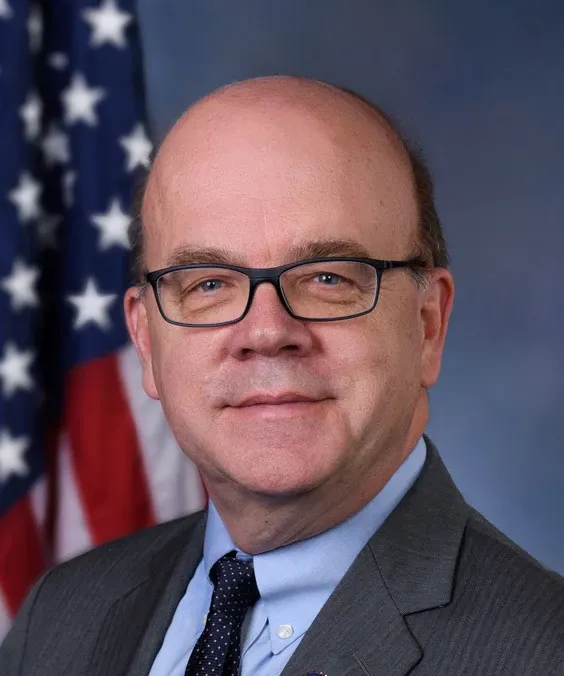
Edward John Markey is a United States Senator from Massachusetts, having served since July 24, 2013. A member of the Democratic Party, Markey previously represented Massachusetts in the U.S. House of Representatives from April 14, 1976, to July 24, 2013. Throughout his career, he has been a strong advocate for environmental issues, telecommunications, and technology policy. Markey played a significant role in the development of legislation aimed at addressing climate change and promoting renewable energy sources.
The most important species impacted by the spill has been the resilient people of the Gulf of Mexico.
The researchers found that there have been potentially dangerous changes in this one species that may indicate the presence of a much larger problem.
Just a few weeks into the BP spill, I successfully called on BP to create a $500 million scientific research fund.
They are not talking about how the oil spill could cost the Gulf region $22 billion over three years and lost tourism, according to one study.
Holding a hearing on the impact of a safety check following an unimaginable oil spill is a little like holding a hearing on the impact of wearing a cast after shattering your leg without looking at the accident that required the cast.
The Republican majority is holding a hearing on the one year anniversary of the end of a temporary pause for a couple dozen of the riskiest deepwater drilling rigs in the Gulf of Mexico.
Most Americans likely remember the date April 20th, 2010, as the day the Deepwater Horizon exploded and the BP oil spill began.
I thank the gentleman. If the regulation to remove mercury, lead, and cancer-causing toxins from incinerators and industrial boilers--which is already 11 years overdue--is delayed for even 1 year, there will be 6,600 people who will die…
What we have seen is with COPPA, we have a framework where there is an industry that appreciates the concerns about children, but with teenagers, it has been no holds barred and no real sensitivity to their concerns.
The Do Not Track Kids bill that Joe Barton and I introduced provides teens with safeguards specifically tailored for their age group without expanding the COPPA structure to adolescents.
Children should be able to grow up in an electronic oasis that enables access to online education, to education and entertainment opportunities in a safe environment.
I commend the Commission for rejecting arguments that voluntary self-regulatory efforts are the best way to address privacy concerns in connection with behavioral targeting of children online.
What were they thinking? It will want to be the parents who will want to erase it. They have a right to do so. I am not talking about Big Brother; I am talking about Big Mother and Big Father.
The legislation offered by Representative Joe Barton and Representative Ed Markey known as the Do Not Track Kids Act of 2011 is based on these principles.
The Commission is not aware of any operator directing online behavioral advertising to children.
I hope that moving forward with privacy legislation we can look to COPPA's revised rule and apply the strong commonsense privacy protection measures to all Americans.
The proposed revised COPPA Rule is stronger and it will better protect American children from their data falling into the wrong hands.
I am the House author of the Children's Online Privacy Protection Act, which Congress passed and President Clinton signed into law in 1998.
This Administration has consistently held the position that fair and equal application of our laws toward all tribes is essential to upholding the United States' nation-to-nation relationship with Indian tribes.
Representatives of the Tohono O'odham Nation like to claim the proposed casino would create many jobs for the West Valley.
The Tohono O'odham Nation has broken the compact into which it entered, thereby rendering the proposed casino in violation of the 1988 law.
It's also worth asking the question: what is the purpose of such a compact if any party may simply break it, at will, without ramifications?
My opposition stems from the very common-sense and, indeed, vital rule of law that says when you enter into a contract, you are expected to abide by that contract.
The National Ocean Policy will increase government efficiency and enable sound management of public resources.
Politicians like Ed Markey