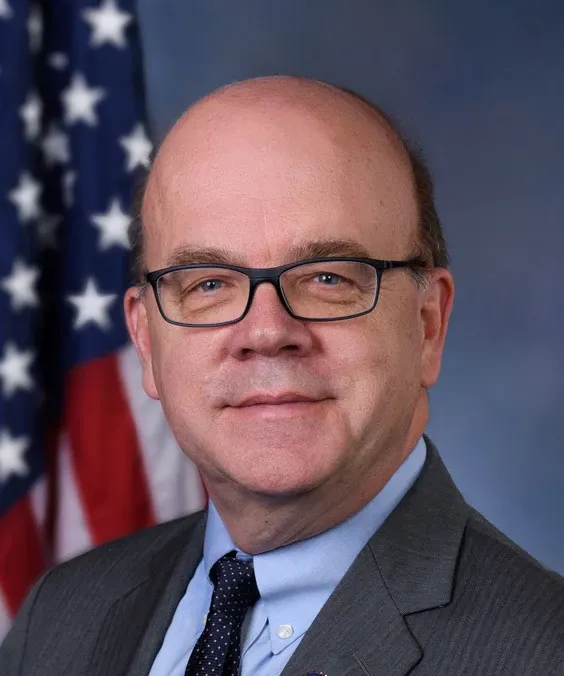
Ed Markey
The Public Record
Edward John Markey is a United States Senator from Massachusetts, having served since July 24, 2013. A member of the Democratic Party, Markey previously represented Massachusetts in the U.S. House of Representatives from April 14, 1976, to July 24, 2013. Throughout his career, he has been a strong advocate for environmental issues, telecommunications, and technology policy. Markey played a significant role in the development of legislation aimed at addressing climate change and promoting renewable energy sources.
Jul 22, 2013
The bottom line is, what do the requirements to end overfishing combined with ensuring that the overfished fishery operates together as part of a rebuilding process do in order to ensure that something like winter flounder stocks are in…
Jul 22, 2013
I think it's important for us to focus on those areas that are all in agreement so that we can ensure that they are in any legislation as we move forward.
Jul 22, 2013
I think possibly a large USDA buy of our domestic dogfish and putting it deeper into domestic markets could really put a lot of guys back to work and show some glimmer of hope for commercial fishermen up and down the coast.
Jul 22, 2013
I hope Congress can support this part of the President's budget because it's going to provide insights that are going to help us manage fisheries and ecosystem change.
Jul 22, 2013
I will continue to work with my colleagues in Congress for emergency fishing disaster funding.
Jul 22, 2013
New England is the home of America's first fisheries, so it is fitting that this subcommittee begins its work to reauthorize Magnuson-Stevens Fishery Conservation and Management Act by hearing from New England fishermen.
Jul 22, 2013
I think climate is something that exerts more and more of an impact and fishermen are the first who can tell you that.
Jul 22, 2013
Would you provide that information in writing to the Committee and to me as well, please?
Jul 16, 2013
We keep reading about this hundreds of thousands or--whatever, tens of thousands, a hundred-thousand jobs that are available right now in the Silicon Valley which we can't fill because we don't have the people trained, technically, for it.
Jul 16, 2013
If we could just increase the cap, then I think we could see the type of expansion that's needed.
Jul 16, 2013
It's targeted toward those who need the extra funding most. And you can see, in the hands of any kid, regardless of income, regardless of race, that, once you put the technology in front of them, they're going to be adapting to it just as…
Jul 16, 2013
I don't think there's anything that either of us will ever do that really matches the impact that the E-Rate can have upon the families of every single citizen in our country.
Jul 16, 2013
It is an honor to be on the Commerce Committee with you and to know that you played, along with Senator Snowe, the key role, over here in the Senate, in making sure that the E-Rate is available to children in America.
Jul 16, 2013
I think it's time for us to establish a plan so that we maintain our excellence.
Jul 16, 2013
We have to make sure that we're focused on, not just the connectivity of the school, but also the value it's bringing to the student.
Jul 16, 2013
Ultimately, that is what is going to help to ensure that we are competitive in the 21st century, because education is what it is that makes our country great.
Jul 16, 2013
We need greater speed, better Wi-Fi, a more streamlined process for applications.
Jul 16, 2013
I think the modernization of E-Rate is important for the children, it's important for the country, and it's important for our competitiveness.
Jul 16, 2013
The E-Rate is a big part of that. And, in fact, the--access to the Internet in schools is the first educational technology to have ever been deployed at the same rate for affluent children as it was for the children of the poor.
Politicians like Ed Markey