Ed Markey
The Public Record
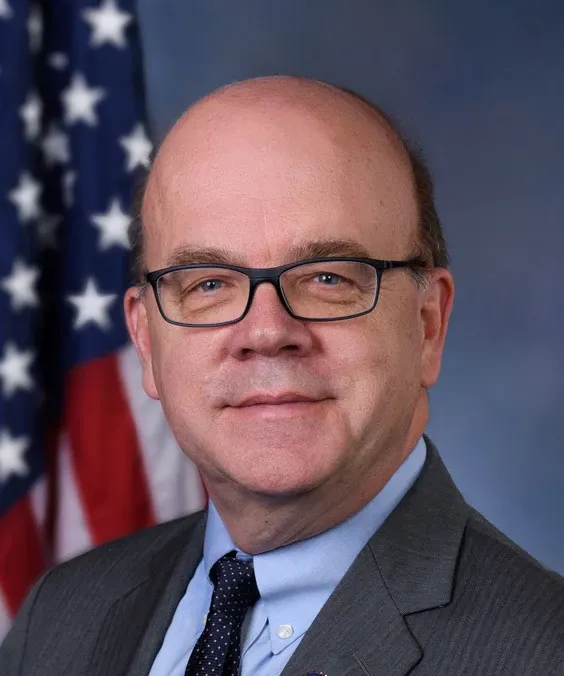
Edward John Markey is a United States Senator from Massachusetts, having served since July 24, 2013. A member of the Democratic Party, Markey previously represented Massachusetts in the U.S. House of Representatives from April 14, 1976, to July 24, 2013. Throughout his career, he has been a strong advocate for environmental issues, telecommunications, and technology policy. Markey played a significant role in the development of legislation aimed at addressing climate change and promoting renewable energy sources.
Mar 12, 2014
We do not have self-sufficiency in natural gas in the United States. We import it. We do not have self-sufficiency in oil. We import it.
Mar 12, 2014
Let us not export this oil, or otherwise we have to continue to export young men and women.
Mar 12, 2014
The Energy Information Agency said that if we allow for an export, just one more terminal is approved, that it would lead to a $62 billion increase in costs for American consumers per year.
Mar 12, 2014
I do not think the Edison Electric Institute was utterly ridiculous. I think they understood where we have to go to protect the climate.
Mar 12, 2014
We are talking about the dirtiest oil in the world, coming through the United States, almost using us as a straw.
Mar 12, 2014
You cannot preach temperance from a bar stool. You have got to be lowering your greenhouse gases, not increasing them.
Mar 12, 2014
I am going to be introducing legislation today to ensure that the Keystone pipeline, if it is approved, that oil has to stay in the United States.
Mar 12, 2014
The oil industry is pushing to reverse four decades of law prohibiting the export of American crude oil so that our crude oil can be shipped to China.
Mar 10, 2014
I am honored to be joining Senator Schatz who has been working with Senator Whitehouse and with Senator Boxer to put together this very important discussion, very important evening. While we are discussing climate change, I thought I would…
Mar 10, 2014
I think we can all agree that preventing the spread of weapons of mass destruction (WMD)--especially nuclear weapons--is one of the highest priorities for our national security.
Mar 5, 2014
We need a big national debate over this bonanza of shale oil and gas and see how we benefit most as a country.
Mar 5, 2014
I do not think the analysis has been done. I think people are just throwing this out as some big idea.
Mar 5, 2014
I want to very strongly contest this idea that massive exportation of American energy is going to affect the Ukraine.
Mar 5, 2014
Do you think requiring companies to assess whether there exists opportunities to reduce the consequences of a potential attack or accident by using safer processes or chemicals makes sense?
Mar 5, 2014
Inherently safer technology is not exclusively focused on substituting safer chemicals for more dangerous ones.
Mar 5, 2014
What we are trying to tell people is that this should be expanded, that all the chemical industry be covered by these approaches.
Mar 5, 2014
Isn't it true that the explosion at the fertilizer facility in West, Texas, that killed more than a dozen people and destroyed a large portion of the town could have been prevented or minimized if it had stored its ammonium nitrate more…
Mar 5, 2014
But these same chemicals could also be turned into a weapon of mass destruction by terrorists.
Mar 5, 2014
Isn't it true that the chemical storage tank in West Virginia that leaked into the Elk River might not have contaminated the drinking water of 300,000 people if the tank had been of a safer design or if the tank had not been placed right…
Mar 5, 2014
I would like you to be providing the committee with the documents that you are using if you are going to be changing your position.
Mar 5, 2014
More than 500 drinking and wastewater facilities have replaced their toxic chlorine gas with safer alternatives. Isn't it true that some chemical substitutions like this can be done quickly and inexpensively?
Politicians like Ed Markey