Apr 6, 2011
The political leadership has not been there in the White House on this.
The Public Record
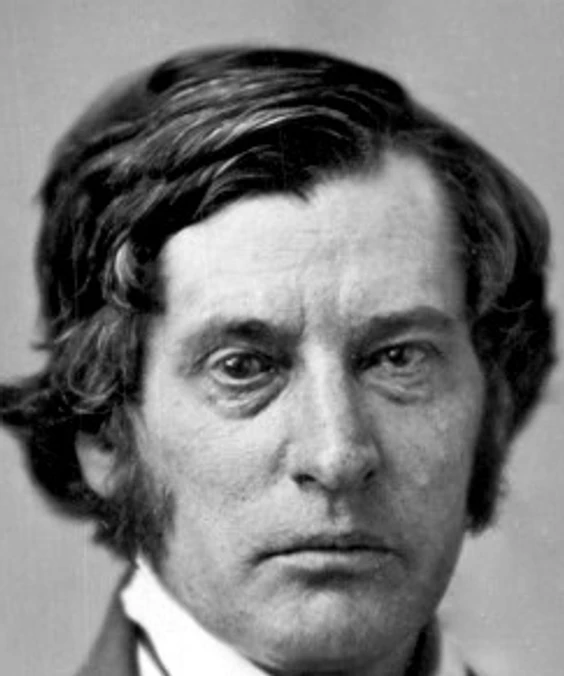
David Gergen was an American political commentator and advisor who served in the administrations of four U.S. presidents, providing insights and guidance on various political matters. Born on May 9, 1942, in Massachusetts, Gergen held significant roles in both Republican and Democratic administrations, showcasing his ability to navigate the political landscape across party lines. He was also a professor of public service at Harvard University, where he influenced a new generation of leaders. In addition to his academic work, Gergen was a senior political analyst for CNN, contributing to public discourse on current events until his passing on July 10, 2025.
The political leadership has not been there in the White House on this.
Will the Tea Party -- yes, that's what I'm asking you. Would the Tea Party punish members, Republicans who vote for a compromise that does not include a Planned Parenthood rider?
I think there's a growing pressure on the White House now, where is your plan? What would you like to see done, Mr. President?
Both sides are playing politics with this, Anderson. It's classic. But I do think there is some indications that, as they get closer to a cliff, that both sides are a little weary of taking us over it.
I thought, in general, he made a compelling case, a very strong case for intervention itself on humanitarian grounds.
But give President Obama his due. On the most important issue that he had to face tonight, why he went in, I thought he made a very, very strong case.
The very fact that neither you nor I have the answer to that question, I think underscores the weakness of the Obama speech.
When President Obama, the president of the United States, commits himself to a course of action, it matters to the whole world.
What the President has to do is keep the Arab nations on board, too, because there's a lot of wavering among the Arab nations.
If we recognize them as the legitimate government of Libya and then can turn over those $30 billion in assets, we're moving toward training them.
Well, the President has been working very hard today to try to keep the power structure together.
The president has to do is keep the Arab nations on board, too, because there's a lot of wavering among the Arab nations.
I think they did a better job today trying to clean that up. Between General Ham this morning and President Obama, I think they have made it clear that in general there is a two-track approach by the United States.
I don't think it's going to be through bombing him. I do think they hope to by -- I think they hope for two things, one, that the sanctions will really tighten on him, and, secondly, very importantly, what Fouad said, and that is that his…
I just don't think the President can sit here and have Gadhafi in power indefinitely.
The hypocrisy comes of course, when we intervene against Gadhafi, our enemy, but you have a green light to our friends to crush the opposition.
We've taken the same risk in Egypt. We came down on the side of people who stood for democracy.
I do. And that's because President Obama and secretary of state Hillary Clinton have both been very firm that Gadhafi must go. That he's an odious figure, and that otherwise, there could be real chaos in the region.
I do. And that's because President Obama and Secretary of State Hillary Clinton have both been very firm that Gadhafi must go.
I don't see how they can retreat from it, or continue to let this sort of go on and on and on. At some point they're going to have to act.
What if you do what John Kerry, the -- the Democratic senator and major figure in foreign policy argues, and that is we ought to use our Air Force to crater their -- their air fields.
Of course we should support the legitimate and genuine aspirations for democracy.
Politicians like David Gergen