May 11, 2009
Essentially, it really seems that you are telling Congress that, unless we pass legislation that will increase the cost of energy, including on low-income families and businesses and schools, then you will be forced, as an agency, to…
The Public Record
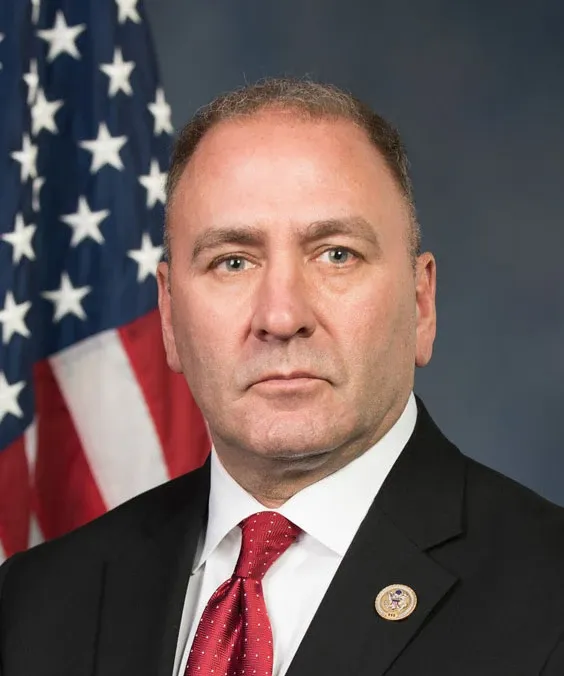
David Vitter is a former United States Senator from Louisiana, serving from 2005 to 2017. A member of the Republican Party, Vitter was known for his focus on issues such as transportation, infrastructure, and environmental policy. During his tenure, he served on various Senate committees, including the Environment and Public Works Committee, where he addressed topics like water quality and pharmaceuticals in the nation's waters.
Essentially, it really seems that you are telling Congress that, unless we pass legislation that will increase the cost of energy, including on low-income families and businesses and schools, then you will be forced, as an agency, to…
I applaud you and the Administration for setting out as a stated goal transparency in all sorts of ways.
It is possible to abuse environmental laws and issue regulations in a manner that puts families out of work and makes doing business in the United States wholly uncompetitive.
I think he can find that extra $100 million in EPA's bloated budget request alone.
There exists no legitimate economic argument that regulating CO2 would not increase the cost of energy.
In the words of Harvard Economics Professor Robert Stavins, we have come to the inescapable conclusion that the economic analysis is terribly deficient in critical ways.
I think we all agree on the need for certainty and predictability and the benefit of that.
Will you recommend that the Agency permanently return to the old rules from prior decades or will you support a new attempt at reforming those rules?
a longstanding battle cry for al Qaeda and other Islamic extremists is that the United States has not been a true neutral partner in the Arab and Israeli conflict.
Yes. For the record, let me just articulate, since the stenographer cannot take down either nods or blank stares, that that seems to be a consensus of the witnesses.
Gasoline consumption is down 2 billion gallons per day, and that is a good thing.
We required 9 billion gallons of renewable fuels to be blended into our gasoline starting in 2008, last year.
We passed bipartisan energy legislation in 2007 that reduced our dependence, or seeks to reduce our dependence on foreign oil and to reduce at the same time harmful emissions into our air.
I'd first like to thank the Chairman, Senator Carper, for holding this hearing as an opportunity discuss the latest issues facing the Renewable Fuels Industry.
I believe there is an excellent opportunity on this subcommittee to work in a bipartisan manner to get some good things done.
Could you give any specific examples since Three Mile Island, not so much Three Mile Island, but since then, of how operating experience has improved plant operations today, including your guidelines for that?
We need to pursue that aggressively and effectively to meet all of our energy and related environmental goals.
I'm very glad you confirmed that our missile defense system is 'an effective system' able to defend against a North Korea missile threat, and I strongly agree with you.
Mr. Sullivan, with the annual Selected Acquisition Reports and current Nunn-McCurdy reporting requirements, is Congress suffering from a lack of oversight and reports from DOD?
Mr. Sullivan, is there any credence to the concern that program managers have 'too many' reports to file and are not focusing on managing their programs?
I am very glad one of the four key pillars you outlined is housing. With a lot of folks I have been pushing to fix housing first and I think we need to that.
Politicians like David Vitter