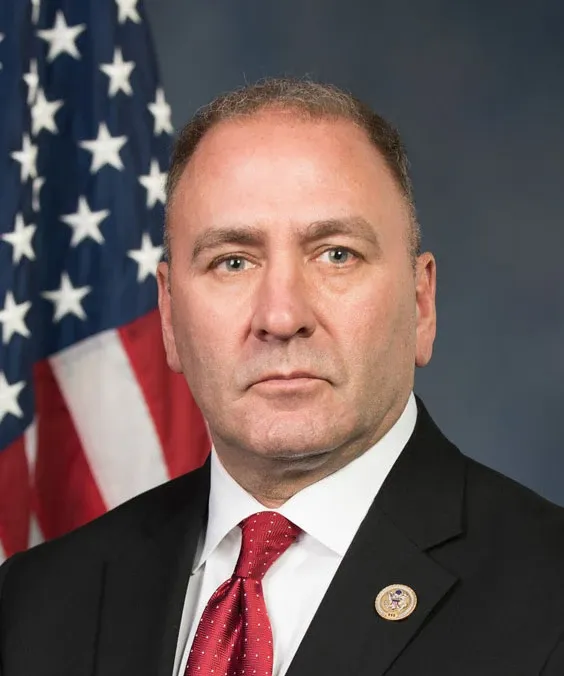
David Vitter
The Public Record
David Vitter is a former United States Senator from Louisiana, serving from 2005 to 2017. A member of the Republican Party, Vitter was known for his focus on issues such as transportation, infrastructure, and environmental policy. During his tenure, he served on various Senate committees, including the Environment and Public Works Committee, where he addressed topics like water quality and pharmaceuticals in the nation's waters.
Feb 6, 2013
Everyone wants to learn the lessons of Katrina. Everyone wants to strengthen engineering and design guidelines in an appropriate way.
Feb 6, 2013
I certainly share the Chair's concerns about all the issues she mentioned, and I will bring up some more.
Feb 6, 2013
This hearing is another clear, bold statement that this entire committee, in a very bipartisan way, is committed to a new WRDA bill.
Jan 30, 2013
Thank you, Madam President. With that I close and thank, again, my colleague from Tennessee. The ACTING PRESIDENT pro tempore. The Senator from Tennessee.
Jan 30, 2013
The funds are, frankly, going to make it look like we have a stockpile of $6 billion somewhere, which, as Senator Vitter points out, is illusory.
Jan 30, 2013
Well, again, this is a big fiction, and I think the first important part of this conversation is to get beyond the fiction.
Jan 30, 2013
Lower Mississippi River, biggest waterway in the Country, one of the biggest in the world, reduced in some cases to one-way traffic.
Jan 30, 2013
This is something you can tell, I hope, we are communicating that we care passionately about and it is thoroughly bipartisan.
Jan 30, 2013
I have to look for a catastrophe to put a supplemental on there to get funding.
Jan 30, 2013
Is the task force focused on our central question today, which is ensuring that all of the revenue into the Trust Fund is spent for authorized uses under statute?
Jan 30, 2013
What it really means is that the other money is stolen and spent on other completely unrelated purposes.
Jan 30, 2013
I appreciate Chairman Boxer including this provision in the current WRDA draft again, but I am disappointed that it has not been funded.
Jan 30, 2013
The lower Mississippi River, which is at vital as anything to our commerce, our waterborne commerce, is traditionally underfunded.
Jan 30, 2013
I requested that we focus on this issue because it is so vital, including in the context of a new WRDA.
Jan 30, 2013
I want to particularly thank Mike for his very concrete, persuasive testimony.
Jan 30, 2013
I think it is a commonsense nonstarter to even have that discussion if half of the Harbor Maintenance Trust Fund is being diverted for unrelated purposes.
Jan 30, 2013
Every time a vessel's draft is decreased by one foot on the lower Mississippi because of under-maintained waterways, this costs shippers about $1 million against the value of their cargo.
Jan 30, 2013
I am very excited to be here. I am very excited to be Ranking Member, and I am very excited about our partnership on infrastructure issues.
Jan 30, 2013
The Administration only spends roughly half that amount for harbor maintenance.
Jan 30, 2013
This was a clear commitment made as part of the New START treaty passage through the Senate discussions, and it just hasn't been kept.
Jan 30, 2013
Things like: not quashing active proselytizing, but telling somebody they can't have a Bible on their desk;
Jan 30, 2013
I am really concerned that this committee vote and this entire nomination is being rushed.
Politicians like David Vitter