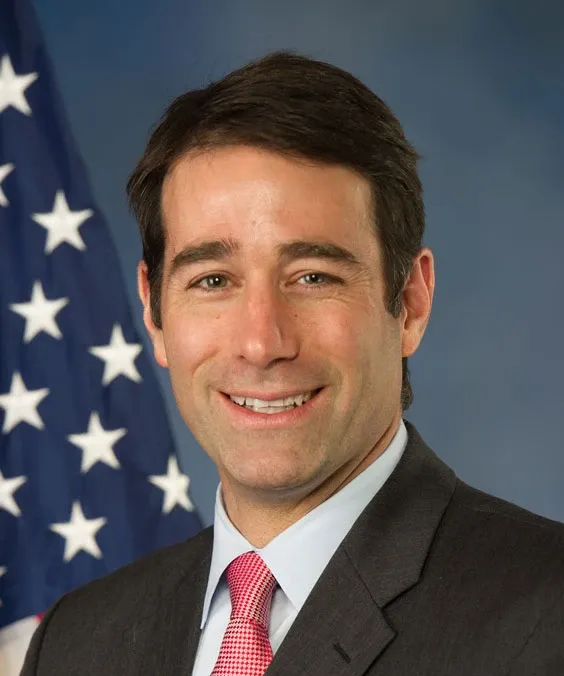
David Vitter
The Public Record
David Vitter is a former United States Senator from Louisiana, serving from 2005 to 2017. A member of the Republican Party, Vitter was known for his focus on issues such as transportation, infrastructure, and environmental policy. During his tenure, he served on various Senate committees, including the Environment and Public Works Committee, where he addressed topics like water quality and pharmaceuticals in the nation's waters.
Mar 25, 2014
That the Obama EPA can get away with this kind of distortion proves the Agency, in my opinion, is out of control.
Mar 25, 2014
The Obama EPA has embraced the strategies of this playbook and pursued ideologically driven agendas in much the same way as Beale did in the 1990s.
Mar 25, 2014
EPA's continued use of the playbook has led to dire consequences for Americans.
Mar 25, 2014
This is a very important oversight hearing about EPA's budget and overall what is going on at EPA, its management practices, how it is being run.
Mar 25, 2014
Were you concerned to act until the White House looked into it and made sure there would not be any political fallout?
Mar 25, 2014
These examples of waste and abuse make congressional oversight absolutely critical.
Mar 25, 2014
We in the Senate are charged with stewarding this Nation, which includes watching out for those who are most vulnerable.
Mar 6, 2014
Yes, it is absolutely critical for Louisiana veterans as well that both of the clinics in Lafayette and Lake Charles are authorized and finally built. To clarify, both of the Louisiana clinics are not new projects. They would actually be…
Mar 5, 2014
In your opinion, should inherently safer technologies take into account factors such as risk shifting, unintended consequences, feasibility, and economic impacts?
Mar 5, 2014
I think we have a historic opportunity to come together in this committee on a bipartisan basis.
Mar 5, 2014
It is a historic opportunity. It hasn't happened on this committee on any major environmental issue in decades.
Mar 4, 2014
I would suggest recent events with Russia, for instance, suggest that changes around the world may be more the norm than the exception.
Mar 4, 2014
The 5-year budget proposal submitted by NNSA is, 'fragile, and any funding reductions at this point could pose unacceptable risk to the health of the nuclear enterprise.'
Mar 4, 2014
Funding for NNSA weapons activities has come at the expense of nonproliferation programs.
Mar 4, 2014
They do this through constant surveillance of the stockpile and by implementing life extension programs (LEP) for warheads and bombs that are well past their design life.
Mar 4, 2014
The NNSA and the National Labs are responsible for maintaining the effectiveness of our nuclear stockpile.
Mar 4, 2014
I do question that. If we have nuclear weapons in the triad, for important strategic reasons, I think we should have them in the most effective, including cost-effective, way possible.
Politicians like David Vitter