Jun 15, 2023
We are always prepared, and if you don't do that, you have to dig your hole even deeper.
The Public Record
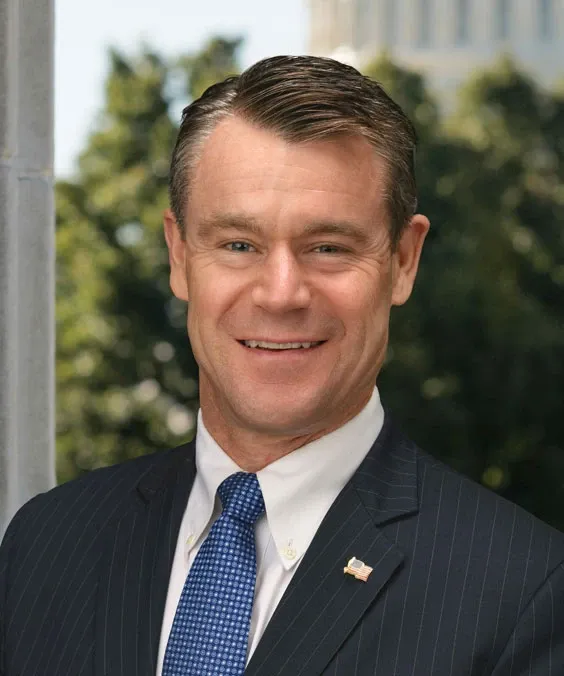
Mike Braun is an American businessman and politician currently serving as the junior United States senator from Indiana, a position he has held since January 3, 2019. A member of the Republican Party, Braun has focused on issues such as fair representation and gerrymandering, advocating for equitable electoral maps in Indiana. His business background includes founding a successful auto parts company, which has informed his approach to economic policy and job creation.
We are always prepared, and if you don't do that, you have to dig your hole even deeper.
It's crucial that our emergency response plans are inclusive and accessible to all.
Interest payments on our debt are going to be the single most expensive thing we do in the Federal Government.
Prudent budgeting and planning are integral for both emergency preparedness and response to be successful.
I think it is great advice and I think that data was coming in while we were contending with it, and we just were stubborn in not focusing on where we knew the problem was the worst with the elderly, and yes, we now know, and I think set…
They have a fairly--they have got somewhat larger central Government, probably budget, but they don't borrow money to spend what they want to spend.
It is very important that we have our Federal finances in as strong of a position as possible, and an emergency fund could very well be an important component of that.
Over the last two decades, it is north of maybe $10 trillion that have been added to the Federal debt.
Last week, I joined Sanders, Lee, Blumenthal, Crapo, Risch, and Murphy as a broad bipartisan effort to introduce the Article I Act.
We are always prepared, and if you don't do that, you have to dig your hole even deeper.
This is an expensive lesson that we have learned, and we have--Chairman Casey mentioned how it ravaged senior citizens.
I think sooner or later, when you have any understanding of fiscal policy and macroeconomics, you are going to pay the piper with inflation and other things that happen due to that approach.
We cannot adopt the model of panicked crisis governance as a standard response for emergencies.
More money borrowed, more money spent, and it really didn't do a great job on protecting those that needed it most.
I introduce the Plant Biostimulant Act with Senator-- and it is bicameral and bipartisan as well.
I think, from this Committee, I am glad the Chairman is putting emphasis on small entities within agriculture.
I am concerned about that larger picture of where we are at as a government in terms of how we are borrowing so much money, just routinely, year after year.
Do you think farmers would do as much of that without the help from the federal government on that particular stuff?
Finding a seemingly small area of bipartisan agreement can lead to lasting change for the sake of our constituents.
When government adds red tape to farming operations, it can add costs, and in turn reduces the ability for farmers to add sustainable practices.
Politicians like Mike Braun