Feb 26, 1893
A serious question would be raised as to whether these officers were not at once legislated out of office and vacancies created.
The Public Record
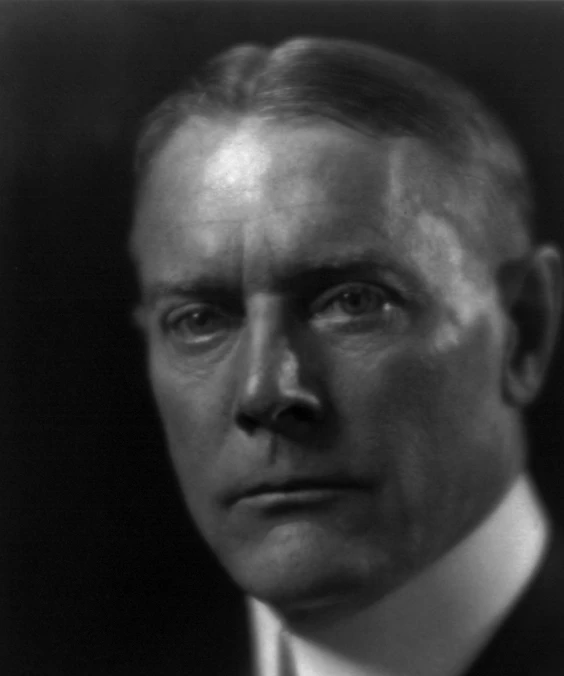
Benjamin Harrison was the 23rd President of the United States, serving from 1889 to 1893. A member of the Republican Party, he was born on August 20, 1833, in North Bend, Ohio, and later moved to Indiana, where he established his political career. Before his presidency, Harrison served as a United States Senator from Indiana from 1881 to 1887. He was known for his advocacy of protective tariffs and for being the first sitting president to attend a football game, reflecting his interest in American sports and culture.
★ Featured Quote
February 28, 1893
I transmit herewith the fifth special report of the Commissioner of Labor.
— Ben Harrison
A serious question would be raised as to whether these officers were not at once legislated out of office and vacancies created.
No provision is made for a continued discharge of the duties of marshal and district attorney by the present incumbents.
The law should at least have contained a provision for the continued discharge of their duties by the incumbents until the new officers were appointed and qualified.
The law creates two new officers, whose aggregate compensation may be $12,000 per annum, without, it seems to me, a justifying necessity.
As these vacancies could not be filled immediately, the business of the courts would seriously suffer.
An examination of the records of the Attorney-General's office as to the amount of business in the courts in these districts leads me to believe that two districts would provide amply for the disposition of all public and private cases.
I herewith transmit, for the information of Congress, a communication from the Acting Secretary of State, forwarding certain bulletins of the Bureau of the American Republics.
But the most serious objection to the legislation is that it creates at once upon the taking effect of the law the offices of district attorney and marshal for each of the three districts, and the effect, it seems to me, must be to abolish…
That event is interesting in itself, but its interest to me is in the fact that this ship is the type and precursor of many others.
It gives me pleasure to consummate here to-day, by the act of lifting this flag, the efforts in support of a principle to which I give my hearty support.
I believe we have reached an epoch in our development when we may successfully begin the work of carrying our share of the world's commerce upon the seas.
We lift the flag to-day over one ship, a magnificent specimen of the naval art, one of the best on any sea.
I have felt as a citizen and as President a mortification which every American must feel who examines into the standing of the United States in the merchant marine of the world.
I transmit herewith a report submitted by the Acting Secretary of State in response to the resolution of the Senate of February 2 last, relating to the building of the Ozama River bridge at Santo Domingo City by American citizens.
The correspondence which accompanies the treaty will put the Senate in possession of all the facts known to the Executive.
It has been the policy of the Administration not only to respect but to encourage the continuance of an independent government in the Hawaiian Islands so long as it afforded suitable guaranties for the protection of life and property and…
The commissioners representing the Hawaiian Government have consented to leave to the future and to the just and benevolent purposes of the United States the adjustment of all such questions.
This legislation should be, and I do not doubt will be, not only just to the natives and all other residents and citizens of the islands, but should be characterized by great liberality and a high regard to the rights of all people and of…
If it meets the approval of the Senate, peace and good order will be secured in the islands under existing laws until such time as Congress can provide by legislation a permanent from of government for the islands.
The influence and interest of the United States in the islands must be increased and not diminished.
Such a possession would not consist with our safety and with the peace of the world.
Only two courses are now open--one the establishment of a protectorate by the United States, and the other annexation full and complete.
The provisional treaty, it will be observed, does not attempt to deal in detail with the questions that grow out of the annexation of the Hawaiian Islands to the United States.
Politicians like Ben Harrison