This treaty marked Bonaparte as the most constructive diplomat, as well as the foremost captain, of the age, for such he had already proved himself to be.
Albert Beveridge
The Public Record
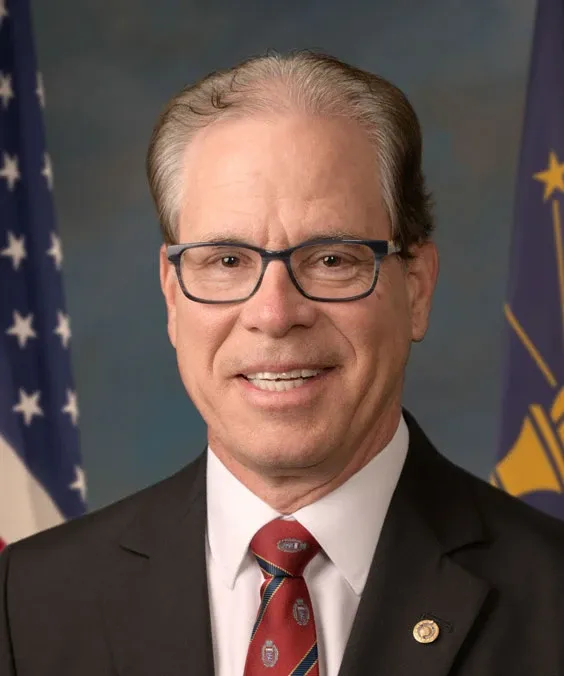
Albert Jeremiah Beveridge was an American historian and United States senator from Indiana. He was an intellectual leader of the Progressive Era and a biographer of Chief Justice John Marshall and President Abraham Lincoln.
gutenberg.org
Few utterances ever made by him more clearly reveal the mettle of the man; and none better show his conception of the American Nation's rights, dignity, and station among the Governments of the world.
That to lend ... money to a belligerent power abounding in every thing requisite for war but money was to relinquish our neutrality and take part in the war.
To lend this money under the lash & coercion of France was to relinquish the government of ourselves & to submit to a foreign government imposed on us by force," Marshall declared.
That we would make at least one manly struggle before we thus surrendered our national independence.
Disgusted with these indirect and furtive methods, Marshall insisted on writing Talleyrand on the subject that the envoys had been sent to France to settle.
Paris presents one incessant round of amusement & dissipation but very little I believe even for its inhabitants of that society which interests the heart.
Every day you may see something new magnificent & beautiful, every night you may see a spectacle which astonishes & enchants the imagination.
The most lively fancy aided by the strongest description cannot equal the reality of the opera.
Marshall then reviews the international situation and makes it so plain that America could not take part in the European wars, that even Talleyrand was never able to answer the argument.
But these treaties, Marshall points out, did not require America to take part in this war.
Such was the moral ground upon which Marshall built his argument, and he strengthened it by practical considerations.
Problems of this character, Marshall explains, must be solved by European countries, not by the United States.
The immense and varied resources of the United States can only be used for self-defense, reasons the Virginia lawyer.
Neither the genius of the nation, nor the state of its own finances admit of calling its citizens from the plough but to defend their own liberty and their own firesides.
A fraudulent neutrality is no neutrality at all....
Stating the general purposes of the United States, Marshall strikes at the efforts of France to compel America to do what France wishes and in the manner that France wishes, instead of doing what American interests require and in the…
The American people, he asserts, "must judge exclusively for themselves how far they will or ought to go in their efforts to acquire new rights or establish new principles.
When they surrender this privilege, they cease to be independent, and they will no longer deserve to be free.
Marshall states the economic and business reasons why the United States, of all countries, must depend upon commerce and the consequent necessity for the Jay Treaty.
So strong is Marshall's summing up of the case in these portions of the American memorial that it is hard for the present-day reader to see how even the French Directory of that lawless time could have dared to attempt to withstand it…
I should think that if the French Government continues its hostility and does not relax some little in its hauteur its party in the United States will no longer support it.
Gerry can negotiate a treaty which shall preserve the peace without sacrificing the independence of our country.
Marshall bluntly told him that Talleyrand's plan now was "only to prevent our taking decisive measures until the affairs of Europe shall enable France to take them.
Our children see this and learn to imitate it....
Politicians like Albert Beveridge