Jul 7, 2015
So what proposals are you going to provide to us to make this program sustainable?
The Public Record
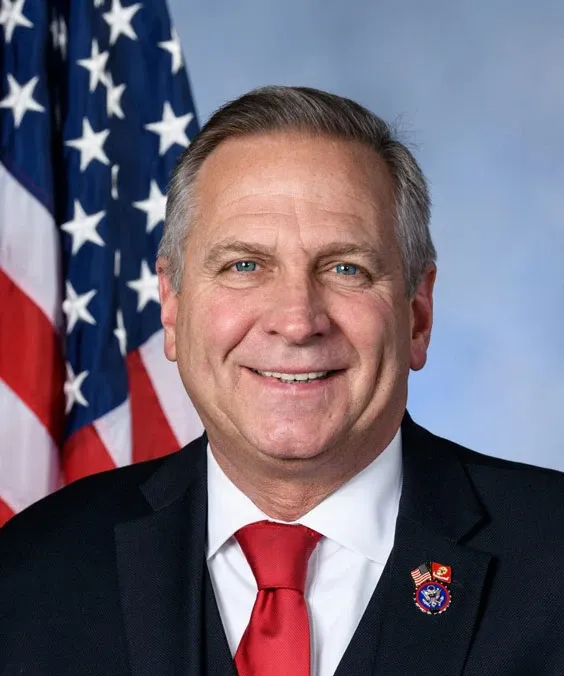
John Shimkus is a former U.S. Representative from Illinois, serving in the House from January 7, 1997, until January 3, 2021. A member of the Republican Party, he represented Illinois's 15th congressional district. During his tenure, Shimkus was known for his work on issues related to energy, environment, and agriculture, often advocating for policies that supported these sectors. He served on several committees, including the Energy and Commerce Committee, where he focused on energy policy and environmental regulations.
So what proposals are you going to provide to us to make this program sustainable?
So that brings me to H.R. 2119, which is the bill I dropped, just to really say sign off on it.
Wouldn't it be prudent to have you all and your actuaries sign off on each demonstration to ensure that it is budget neutral?
I do believe we have achieved in the role of the Government Advisory Committee at ICANN today a very powerful and unique balance.
And yes, we are in a better place than we were a year ago, and it is thanks to your help.
Last month the House acted on a bipartisan basis to pass this subcommittee's DOTCOM Act.
ICANN must be more accountable if it is to be trusted with the stewardship of IANA.
I am proud of the work of this subcommittee to ensure that the IANA transition preserves the Internet we know.
That is correct. We do not intend to interfere with operation of Proposition 65 unless a requirement under that law actually conflicts with a federal requirement under TSCA.
Yes it is. H.R. 2576 contains protection for existing state laws and existing citizen enforcement actions. No existing state requirements will be preempted unless they actually conflict with federal requirements.
We do need transparency so that the States understand the process, how to get things approved.
CMS is standing in the way of a lot of State innovation by not approving commonsense waivers, and taking long, long periods of time to improve--to approve the ones they do.
I personally believe Congress should give States authority to adjust their programs without any CMS waiver, as long as it is within the law.
So, you know, that story kind of just supports our concern and the reason why we dropped the bill.
The claims, they are not being substantiated by the facts. The facts don't substantiate the claims that States have made that we can build a better mousetrap, provide better care, and actually have a savings to the Medicaid system.
Without it and the population growth and the climate changes, we could be in a disastrous position.
Biotechnology is the best solution for those problems I just talked about by far.
As far as I am concerned, they don't exist, and I don't think any of the dollars that are being provided should go to anything like that.
Politicians like John Shimkus