Jul 25, 2017
A government commitment to high-quality education, period, which unfortunately has become a matter of some dispute.
The Public Record
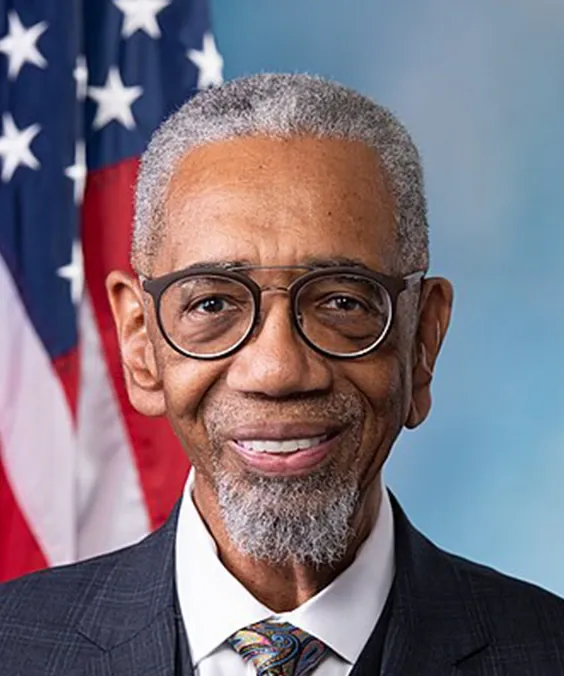
Bill Foster is an American businessman and politician currently serving as the U.S. Representative for Illinois's 11th congressional district, a position he has held since 2013. A member of the Democratic Party, Foster has focused on issues such as science, technology, and economic development during his tenure in Congress. He has a background in physics and has worked in the private sector, including founding a successful technology company.
A government commitment to high-quality education, period, which unfortunately has become a matter of some dispute.
I am a proud co-sponsor of the Fostering Innovation Act--I think our side's co-sponsor is Kyrsten Sinema--but it is an example of really the sort of sensible tweaks that should be made, because this is, in the end, a matter of balance.
Every year, the citizens of Illinois write a check for approximately $40 billion to States largely in the Sun Belt and rural areas.
I believe that the Federal Reserve deposits are exactly the sort of safe place for these large immediately callable cash positions that we should actually be encouraging because of the strength and reliability of the Federal Reserve as a…
But I think when I look at the debate over monetary policy, the big problem is that we are not looking enough at the distributional consequences of this.
Grown-up substantive discussions with the Congress about which theories the Fed is supplying, what the alternatives are, who the winners and losers may be, and what the implications for political economy and political finance are, just as…
As a political act, it should be openly and clearly discussed with the elected Representatives of the People who have the constitutional responsibility for the nature of money.
Now, there can be no doubt that taking $2.4 trillion from some people and giving it to other people is a political act.
The massive Medicaid cuts that the Republican House, passed and the Republican Senate has right now under their jurisdiction, will absolutely devastate retirees.
I think one of the reasons that we have a lot of--both parties talking past each other in a lot of these things and often coming up with imaginary scenarios of what might have happen.
I think it's important that we look this dragon in the eye and make sure that all Members of Congress who claim that they support science speak up at times when science funding is at this kind of threat.
I think that's fundamental to--you know, we have to plan how to convince the public to write a great big check to do this.
I'm really excited to just think about what the James Webb Space Telescope is going to mean.
That is right. And actually, the IMF may have a role in encouraging that globally.
Right. But a solution to that problem could actually at least be a partial solution to this.
But this is the way we have lived for at least 40 years in the United States and it has real, long-term impacts.
I know in my State of Illinois, we lose about $40 billion a year, which is very comparable to the Greek subsidy.
I think there is a bigger concern within Europe, especially after the U.K. vote to leave the European Union, that if Greece were to leave, it is showing that the continental system, the political system that they have struggled so hard to…
There are a number of very interesting lessons that the world, as well as our country, I think should learn from this.
I again thank my colleague from Arkansas (Mr. Hill) and now-Governor Carney, as well, for working on this bill over the past years. I look forward to it being signed into law. Mr. Speaker, I yield back the balance of my time.
The catastrophe was caused by the simultaneous collapse of all three legs of our financial system: the collapse of Republican monetary policy; Republican fiscal policy; and Republican regulatory policy.
I think this is a tradeoff that we have to understand, and not duck from the fact that it is a fundamental tradeoff that will always be with us.
Politicians like Bill Foster