Apr 1, 2019
It underlines the fact that Congress hasn't been paying enough attention to the power of tech on this.
The Public Record
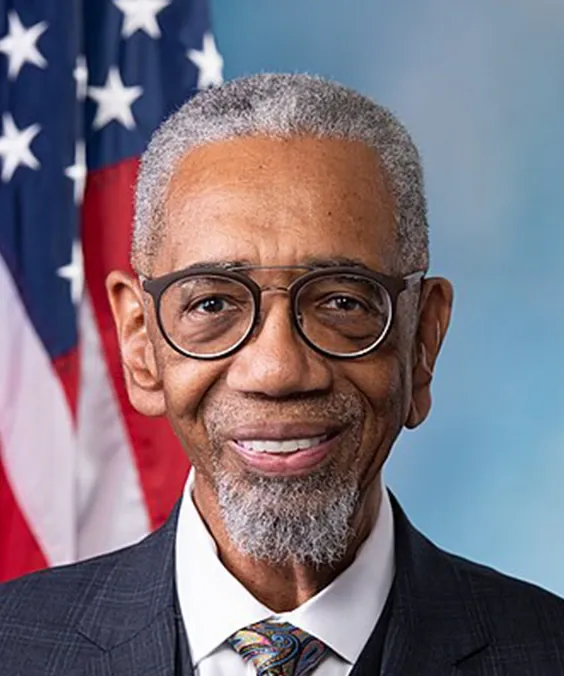
Bill Foster is an American businessman and politician currently serving as the U.S. Representative for Illinois's 11th congressional district, a position he has held since 2013. A member of the Democratic Party, Foster has focused on issues such as science, technology, and economic development during his tenure in Congress. He has a background in physics and has worked in the private sector, including founding a successful technology company.
It underlines the fact that Congress hasn't been paying enough attention to the power of tech on this.
I remember trembling with rage when I saw the redlining pictures of Joliet and Aurora from the 1930s.
I guess the point of my question is if this is a manpower-limited thing, then I think there is an argument to be made to just increase the manpower available so this situation doesn't happen.
Willowbrook, Illinois, in my district is home to a sterilization facility that's used ethylene oxide for decades to sterilize medical equipment.
EPA Executive Summary submitted by Representative Bill Foster, Committee on Science, Space, and Technology, U.S. House of Representatives.
We're now returning to heavy launch vehicles as the cheap way to get stuff into orbit, which was the conclusion back in the 1960s.
The nation that comes up with those transformative technologies is going to own space, so it's my opinion that we've been underinvesting in this.
I urge all of my colleagues to have the classified briefing on the technology.
I was wondering, can you provide either approximately right now or in detail for the record, what that breakdown would look like as a function of job classification and salary?
In your very nice brochure that you provided us with, I have to say that there are very high production values.
What I am trying to understand is why this important initiative, one that simply seeks to gather data and shed greater transparency on the student loan market, has been ignored for so long.
This is something that affects 44 million Americans and yet we are not doing what we should about it.
But in this case, no OMB approval was issued, and your agency has done nothing.
I was heartened to see the Bureau under Director Cordray take steps to begin systematically collecting data on the student loan market.
Collecting data to better understand consumer markets and so being able to anticipate the next crisis before it happens was a critical design goal when we created the Bureau less than a decade ago.
I would like to talk about an issue of tremendous importance to the people in my district and to 44 million Americans across the country, the enormous economic and consumer protection challenges posed by student debt.
I think it is remarkable how constant it has been, with no visible change as a result of any of the policies of the last 2 years.
I think it's a very bad predictor of success, but it's one of the--it's easily measurable, so we use it, but it's not at all good.
But there's a real need for something like ARPA-E to fill gaps in the private-sector research and development.
So how much of this has to do with what I view frankly as a sort of assault on the patent system that's happened in the last several years, led actually by Congress.
Thank you. And I guess I'd like to start off by just seconding all the praise that's been showered on ARPA-E for its achievements to date and my gratitude to Bart Gordon for his role in initiating this.
Well, I was interested that it has repeatedly come up in this testimony that data errors are--a dominant source of them are misidentification of individuals.
I think one of the difficulties I've heard pronounced is that it's simply finding a very large number of small leaks is not cost-effective in terms of the savings in natural gas.
The question here is not whether or not this problem is real but rather what is the most cost-effective way of solving it.
I have grown truly tired of introducing myself as the only Ph.D. natural scientist in the U.S. Congress.
Politicians like Bill Foster