Sep 11, 1997
I also agree that it was our intention to fund the program at $225,000 this fiscal year, and I comment the National Student-Parent Mock Election program of its continued success.
The Public Record
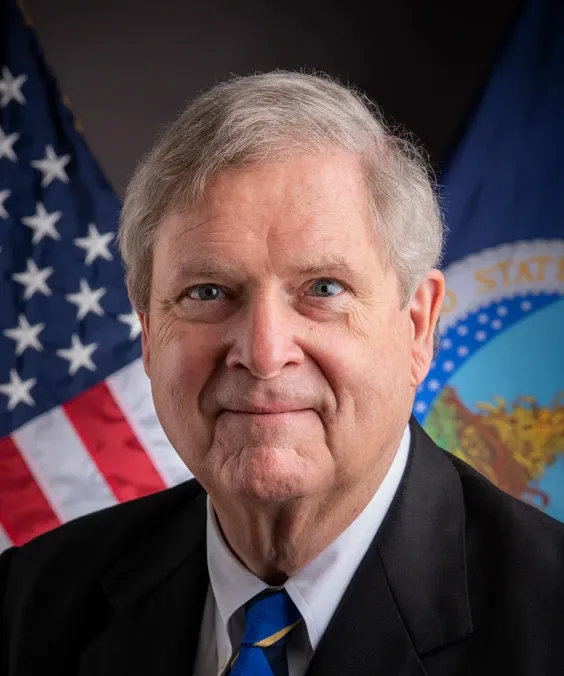
Tom Harkin is a former U.S. Senator from Iowa who served from 1985 to 2015. A member of the Democratic Party, Harkin was known for his advocacy on disability rights and health care reform. He played a significant role in the passage of the Americans with Disabilities Act and was a strong proponent of mental health services and education initiatives. Throughout his tenure, Harkin focused on issues affecting working families and rural communities in Iowa.
I also agree that it was our intention to fund the program at $225,000 this fiscal year, and I comment the National Student-Parent Mock Election program of its continued success.
The pending legislation increases funding for Head Start by $324 million and directs that 10 percent of the fiscal year 1998 increase be dedicated for further expansion of the Early Head Start Program which serves children from 0-3 years…
I also recognize the value of a comprehensive research strategy aimed at detecting, preventing and treating osteoporosis, and I encourage NIAMS and AHCPR to give this research every consideration as they make their fiscal year 1998 funding…
Providing crucial early detection and diagnostic screening services to uninsured women is a high priority for me. It is essential that women who are diagnosed with breast cancer through our efforts are not abandoned without hope of…
I, too, fully concur with Senator Daschle's assessment. NCI must not forsake this important opportunity to expand its breast cancer research agenda. I anticipate that NIH and NCI will give this critical avenue of research every…
It is our intention to support programs which provide such essential drug abuse prevention services to youth. It strikes me that the Crow Creek Youth Center meets that criteria, and I join with my colleagues in encouraging the Secretary to…
Again, I understand and I appreciate the Senator pointing that out. Mississippi made an agreement, Florida has made an agreement, maybe there will be a couple of other States that make agreements, what if later on we make a global…
I understand that, but it is a maximum of $5 million in any regard. Now, this has to do with attorney's fees paid in connection with a State recovering money. This does not have to do with the so-called proposed big settlement that is…
As I understand it, this election has not been certified. That has been brought out in the debate, and therefore we are still operating under the election of this year. As I understand it further, the Senator can correct me if I am wrong…
The letter points out that we are making progress, that we are discovering new things. Now is not the time to revisit this issue. This issue has been settled and I believe we ought to leave it alone. As we have said, the studies have shown…
Keep in mind the $34 million FDA needs is just a drop in the bucket compared to the $50 billion in annual smoking-related medical costs in our Nation. As I close, I want to bring the discussion back to the central issue. That is, whether…
The amendment that Senator Chafee and I offered is on an assessment that was passed by the Agriculture Committee in 1990, not the Ways and Means Committee. The Ways and Means Committee never had any jurisdiction over this. I am somewhat…
The teeth have been pulled out of SAMHSA. But nonetheless, I say to the Senator from Kentucky, that SAMHSA applies to the States. The States do their thing. What the FDA initiative goes to are the retailers. The FDA rule goes directly to…
But there are no teeth saying if you don't meet the requirements of law that you lose their block grants. There are no teeth in it.
SAMHSA does in fact provide that States should or must enforce this and reduce smoking by passing laws that would do that, to take action to do that. However, there are absolutely no teeth at all in this SAMHSA provision because, if States…
A State could conceivably lose its block grant but there are no hard targets that hold the states accountable to enforce laws that cut teenage smoking.
But here is the catch. The tobacco industry was successful in pulling the teeth from this provision. Synar has no teeth because there are no hard targets. It is discretionary whether any State will lose its block grant. That is why SAMHSA…
I respond to the Senator this way, and we had this discussion earlier. The Synar regulation of SAMHSA is not an enforcement program. FDA is. SAMHSA provides no incentives for retailers to stop illegal sales to kids. Through its tobacco…
No, because the States will contract with FDA to help carry out the FDA rule. But there is no mandate that the States have to enforce the FDA rule. We are seeking, with this amount of money, $34 million, a way of implementing the rule…
If I may respond again to the Senator, I think there is a bit of confusion here. It is my understanding that the FDA rule does not impose a mandate on States. It imposes an obligation on retailers who sell tobacco or tobacco products not…
I am told that figure is $34 million. And that is what they are requesting. They are requesting $34 million to expand it from 10 States to 50 States.
If I might respond, that $4.9 million only covers 10 States. We want to cover 50 States. Thus the need for the $34 million.
The $4.9 million is what is expected to be spent this year for the first step in this initiative, this FDA initiative to cut down on tobacco sales to minors under the age of 18. The $4.9 million is the first step in that process.
As I understand it, what the Senator is suggesting is that this money is to help the Federal Government meet its obligations of ensuring that we do not mandate States to do things which we do not fund.
I understand that that is, indeed, what the FDA initiative is for, is to provide funds to the States to implement it and to carry it out.
Politicians like Tom Harkin