The difference is, though we may have children on the coast who people may feel are unruly and misbehave, the one thing we have as an advantage is we know who their Tutu and the Grandma is, and their Grandpa, and we can go to see them, and…
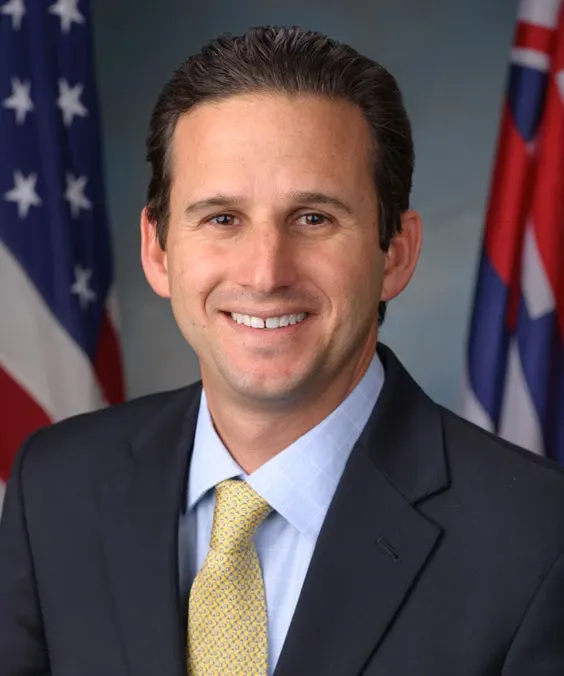
Mazie Hirono
The Public Record
Mazie Keiko Hirono is an American attorney and politician serving as the junior United States senator from Hawaii since January 3, 2013. A member of the Democratic Party, she previously served in the U.S. House of Representatives from January 4, 2007, to January 3, 2013. Hirono is known for her advocacy on issues such as education, healthcare, and civil rights, often emphasizing the importance of public education and human rights in her public statements.
I commend Southwest and Alaska for taking the lead. I am wondering why it is that the other airlines such as United, American, Northwest, why they have not proceeded to implement RNP since it saves money, fuel, lowers carbon footprint…
Thank you, Mr. Chairman. We have been talking about NextGen for quite a while in this Committee, and I confess that just sometimes I get very confused as to what we are really talking about.
And are we meeting our job retention and creation goals with the Recovery Fund money?
The Native Hawaiian people are an indigenous people this is not race-based legislation.
They were a kingdom. We had treaties. The Kingdom of Hawaii had treaties with the United States.
The legislature of the State of Hawaii...has time and again passed resolutions in support of this legislation.
The thing that we should remember is the United States has a special relationship with native peoples, and Native Hawaiians are native peoples.
I particularly appreciate the comments made by my colleagues, Abercrombie of course, Bordallo and Faleomavaega.
The Native Hawaiian people are an indigenous people this is not race-based legislation.
Native Hawaiians were not constituted as tribes as most of us I think understand tribes, but they were a separate nation.
They are still members of the United States. They are still citizens of the United States with all the rights and privileges of citizens of the United States.
That is not an accurate reflection of the support that this legislation of the Native Hawaiians have in Hawaii.
There is nothing in the language of this bill that would lead me to conclude that.
Congress retains some jurisdiction because of the creation of the Hawaiian Homes Commissions Act.
I would say that any kind of an argument that says that, that Native Hawaiians are not an indigenous people, is in my view very wrong.
I cannot disagree more strongly with that statement because there was a Kingdom of Hawaii recognized by the United States.
They are wrong. As I said, there are appropriate lines of cases that apply to the special relationship that the United States has native peoples.
Those of us who have addressed this issue, who have thought about it, who have read the various opinions, we have never viewed this as a race-based issue.
They do not belong to the State? No. It is held in trust, and, of course, one of the trust purposes is for the benefit of Native Hawaiians.
Clearly, I supported the 1978 constitutional convention, which proposed the creation of OHA, which was ratified by the majority of the people of Hawaii.
This is not an equal protection issue. I think this is where the crux of the difference is, that this is not a race-based legislation.
But one of the great attributes of America has always been the ability to look objectively at our history, learn from it, and when possible, to make amends.
Native Hawaiians, like American Indians and Alaska Natives, have an inherent sovereignty based on their status as indigenous native people.
I believe how we treat our native indigenous people reflects our values and who we are as a country.



