May 13, 2014
On the SGR--which was brought up by the chairman and some of the other members--on the question of our need to finally fix it now that we have a window opening.
The Public Record
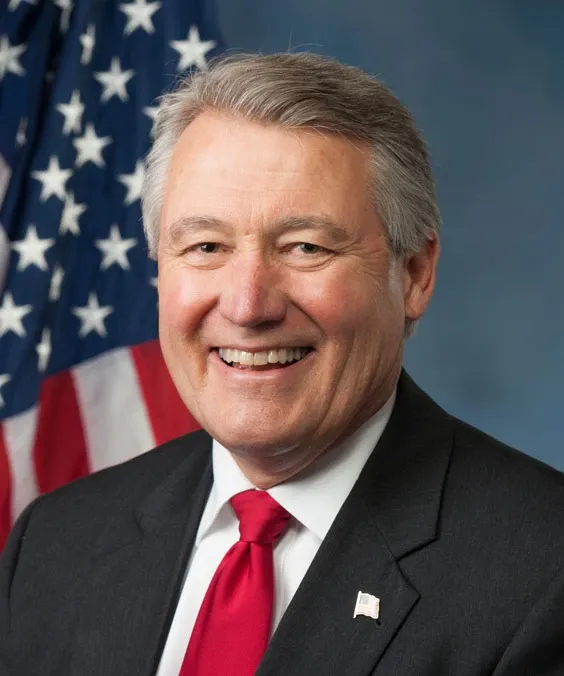
Johnny Isakson was a prominent Republican politician from Georgia who served as a United States Senator from 2005 until his resignation in 2019. Prior to his Senate tenure, he was a member of the U.S. House of Representatives from 1999 to 2005. Throughout his political career, Isakson was known for his focus on issues such as education, healthcare, and veterans' affairs, often advocating for policies that supported these areas. He played a significant role in various legislative efforts, including those related to nuclear energy and environmental regulations.
On the SGR--which was brought up by the chairman and some of the other members--on the question of our need to finally fix it now that we have a window opening.
I have no more important responsibility as a member of the U.S. Senate, including your confirmation, than bringing about a resolution to the Savannah Harbor Expansion Project.
I would like, when you become head of the Department, for you to look at that decision and revisit it.
As you know from our conversations the last couple of days, there is no challenge that I have before me as U.S. Senator more important, including your confirmation, than getting the Savannah Harbor Expansion Project done in my State.
The quicker we deal with the fix, because of the time value of money, the easier the fix is going to be.
Whatever we do to deal with those shortfalls is going to entail some tough choices, either raising revenues in some fashion or reducing the rate of growth of benefits in some fashion.
The worst takeaway of all would be for us to allow our debt to grow and grow and grow, and our obligations to pass our ability to pay them, and then there would be nothing left at all for Social Security or Medicare.
We are not going to be able to fulfill the promises of Social Security and Medicare if we do not reform both eligibility, as well as how the formula is done, as well as look at the revenue sources.
I am one of those who tries to refrain from using 'entitlement reform' when it comes to Medicare and Social Security, because those are contracts we have with the American people that they have paid good money for.
I do not think Ms. Vetter can do her job, or that Mr. Froman can do his job, without TPA.
I am a big promoter of trying to get these trade negotiations completed so we have more opportunity for our companies.
I am a big fan of the negotiations that are going on on both the Trans-Pacific Partnership and the Transatlantic Trade and Investment Partnership.
If we do not stand up for those companies that have made those investments and see to it that trade is as fair as we can make it with Brazil, then other countries will see it as an opportunity to do the same type of thing.
Which tells me that opiate overprescription is probably as big a problem in DOD as it is in veterans' health care.
I hope we will do so as expeditiously as possible, and then I hope we can take action to help support VA.
I worry sometimes that prescribing opiates to mental health patients who come in for their first encounters at VA prescribing opiates might mask a greater problem or might accelerate a problem that exists.
If there is a growing culture that believes it does not matter or it is not as important... we need to nip that in the bud.
We cannot allow ourselves to take the easy way out in terms of pain management or therapy for our veterans.
If you uncover a provider who is not following the proper safety administration of opioid prescriptions, what training or what follow-up do you require to make sure that they do not do it again, or is there a prescription for doing that?
What we are trying to do is find out how we deal with it, and once it happens, to prevent it from happening again.
Seamless transition from DOD health care to veterans health care, which by the way General Schoomaker did a remarkable job of improving.
You've just underlined my point, because we all know the fear is the inspector.
I'm a big supporter of whistleblowers. In fact, I passed legislation a couple of years ago within the Peace Corps to create a whistleblower standard in the Peace Corps that had not existed before.
What we need is the workers and the employers being the inspectors, bringing forward those things that need to be changed.
Politicians like Johnny Isakson