Feb 15, 2017
If we don't increase SNAP-Education funding and we don't really put resources to allow folks to do these incentives...
The Public Record
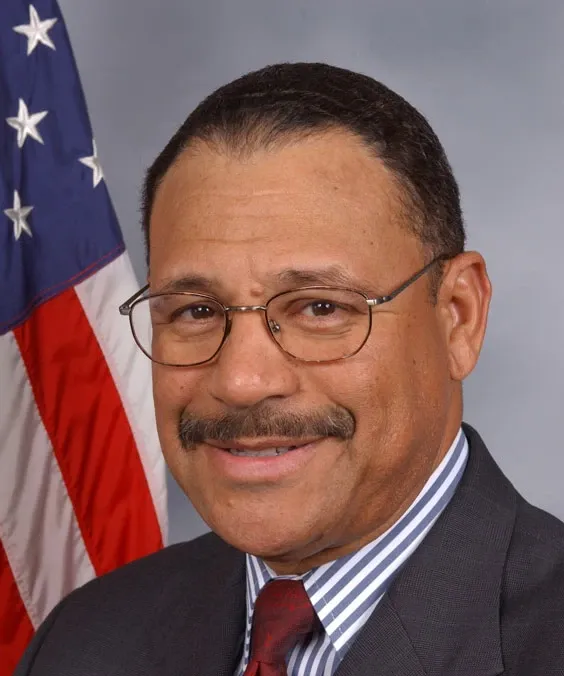
David Albert Scott is an American politician serving as a member of the United States House of Representatives from Georgia's 13th congressional district since 2003. He is a member of the Democratic Party. Throughout his tenure, Scott has focused on issues such as economic development, healthcare, and education, advocating for policies that benefit his constituents in Georgia. He has also been involved in various committees, contributing to discussions on national and local issues.
If we don't increase SNAP-Education funding and we don't really put resources to allow folks to do these incentives...
Food surveillance violates the basic principles of this great country, and first of all, you are going to discriminate between a low-income person simply because for 6 months on average that is all they stay on food stamps.
Think about it. When Thomas Jefferson wrote those words, he said to himself, and he wrote in one particular pamphlet, and he wrote this to his arch competitor, Alexander Hamilton.
You can't force them. You can't deny them their freedoms to be able to make choices without violating their pursuit of happiness.
This whole issue, to me, strikes right at the nerve of the foundation of our great country, which is founded on the principles of life, liberty, and the pursuit of happiness.
Thank you for our work over the past 2 years together in dealing with and addressing this alarming high unemployment rate in the African-American community.
There is a great need to increase the number of young African-Americans seeking careers in the food and agricultural sciences.
The one thing that has held the 1890s back is that they were never given the necessary resources to achieve that equality.
It is very important for everybody to know that the 1890s were founded on the principle of equal opportunity.
Eighty-eight percent of all of the African American students that obtain a college education do so because they have had scholarship and financial assistance.
I would like to just ask each of the Presidents to respond to what this bill will mean to you in terms of an enhanced role of leadership in the African American community, which is certainly badly needed.
It is very important also for the Presidents to address the importance of this bill in relationship to their own standing, their own ability that this will heighten their ability to genuinely have a seat at the table in higher education in…
Central State University has the ability, dedication and determination to produce the best graduate possible.
H.R. 6020 will set a standard of support that breaks the cycle of 'unfulfilled' promise to many generations of students.
H.R. 6020 supports the hundreds of students who have the academic propensity and acumen to not only change their future.
It is not incumbent for us to complete this task, but, Mr. President Lincoln, neither are we free to desist from doing all we possibly can.
The most important industry in the world is agriculture. It is the food we eat.
This is a monumental moment in the history of our African American colleges and universities, ladies and gentlemen.
I want to thank my cosponsors too, if I may, Mr. Chairman. Representative Kevin Cramer, my dear good friend.
I also want to thank Speaker Paul Ryan, who was very helpful to us in getting this moving.
First of all, I want to thank you, Chairman Conaway, for your dedication and for your understanding, and for your longtime support of the 1890s African American colleges and universities.
Politicians like David Scott