Feb 1, 2022
I think we as the Agriculture Committee should have a hearing on the potential reduction in the global food supply and the impact of hunger and the geopolitical stability around the world.
The Public Record
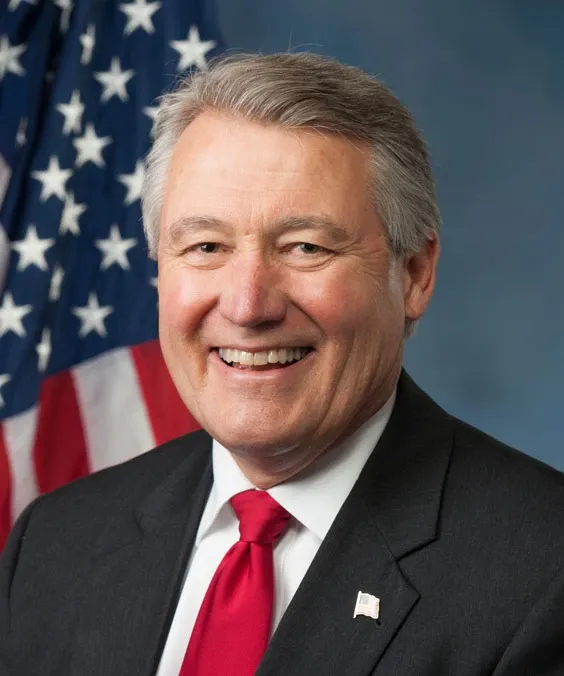
Austin Scott is a Republican member of the United States House of Representatives, representing Georgia's 8th congressional district since 2011. Throughout his tenure, he has served on various committees, focusing primarily on agricultural issues, which are vital to his district's economy. Scott has been an advocate for policies that support farmers and promote rural development in Georgia. He has also been involved in efforts to preserve historical sites within the state, emphasizing the importance of protecting Georgia's rich cultural heritage.
I think we as the Agriculture Committee should have a hearing on the potential reduction in the global food supply and the impact of hunger and the geopolitical stability around the world.
If our crops inside the United States do not have access to fertilizer, then the yields inside the United States and other major food producers will go down.
Ukrainian farmers put 50 million metric tons of corn and wheat into the global food supply.
President Zelenskyy met with Congress this morning. He showed tremendous leadership.
I certainly look forward to working with you on the flexibility with our service providers, and how they can best deliver that.
I think kind of the frustration for everybody is how slow it has been to actually get the resources to the people to implement the technology that is needed in rural America.
I think one of the things that we can do to be more proactive in this equation is to turn back on our domestic energy production, and make us energy independent.
If we could get that right, we would have significant competition in the input market and we would have more fair pricing to our farmers.
The monopolization of the inputs in our food supply to our farmers is what is leading to the majority of the discussion right here.
Thank you to Representatives Cheri Bustos and Austin Scott for including corn growers in the previous Subcommittee roundtable discussion on farm safety net programs.
I hope we can have a conversation here today, going forward, about what improvements we can make to the safety net to provide farmers more certainty.
For them, farming isn't just an occupation. It is their heritage, their livelihood, and a way of life.
I think that over the next several weeks, we will probably see a tremendous number of human beings that will be starving because of the actions of one sick individual.
Our thoughts and prayers go out to President Zelenskyy and the Ukrainian people who are doing a tremendous job of fighting the Russians.
I think they are talking about shortages in labor at the manufacturers as well as trucking shortages and other things.
I hope you and USDA will stay on the Department of Transportation and the Department of Labor, making sure they understand that when we have to have these crop protection products in the field, putting it on 2 or 3 weeks late doesn't work.
Government policies should work for all Minnesotans, while supporting consumer choice, instead of picking winners and losers.
The economic impact of applying countervailing duties of between 30% and 70% on phosphate imports would equate to roughly $480 to $640 million in added fertilizer bills on U.S. farmers.
Prices are set essentially by the global supply and demand picture . . . we don't dictate prices.
It does bother me to see so much wildlife habitat destroyed in the name of, if you will, the environment.
I think that everybody on the Committee, regardless of party, is concerned about.
I am sure you are familiar with the project in south Houston County where approximately 800 acres of forestland was clear cut.
It is costing Americans more to get to the grocery store, as well as costing Americans to get out of the grocery store.
Politicians like Austin Scott