Jun 19, 2019
If we have people that can qualify that shouldn't be on that, why don't we want to tighten that up?
The Public Record
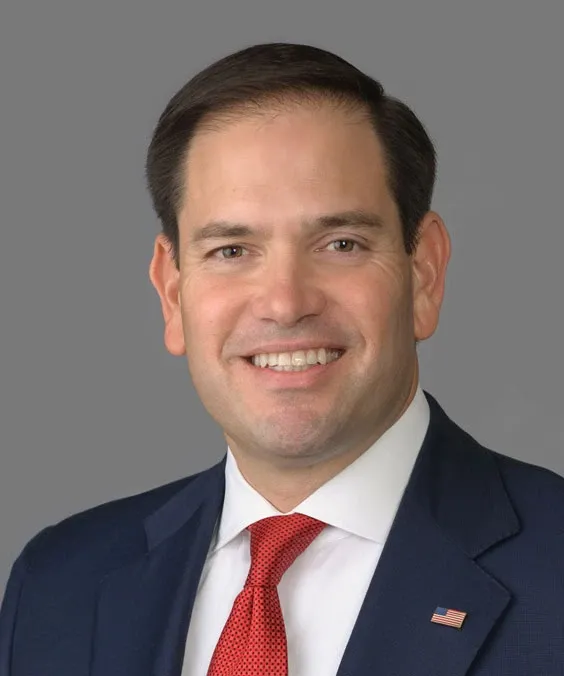
Ted Yoho is a former U.S. Representative from Florida, serving in the House from January 3, 2013, to January 3, 2021. A member of the Republican Party, Yoho represented Florida's 3rd congressional district. During his time in office, he was known for his focus on issues such as healthcare, agriculture, and fiscal responsibility. Yoho was also a member of the House Freedom Caucus, which advocates for limited government and conservative principles.
If we have people that can qualify that shouldn't be on that, why don't we want to tighten that up?
I would think us, as Members of Congress, would come together and say, 'Well, by God, if somebody is cheating the system...'
If the proposed federal rule change had been in place, and households above 130% FPL in gross income or above 100% FPL in net income who were not receiving substantial and ongoing TANF benefits had not been eligible, then Wisconsin would…
Do you have a number that says what substantial is? Because you said it's not substantial, the people that are not needy getting these.
It must be noted that the categorical eligibility does not result in substantial SNAP benefits going to non-needy families and does not mean households automatically get SNAP. They must qualify for benefits.
Because that has been brought up to my attention, but I can show you the fraud on the food stamps out of Jacksonville.
If we are really concerned about the integrity of this program, well, again, by God, we ought to be able to come together and fix that for the American people.
Well, by God, if somebody is cheating the system and it is that easy, we should bring an end to this.
It shouldn't be this side says we are trying to take benefits away from poor people and this side saying poor people are lazy.
If we build a stable government we can progress into these things and think a lot quicker.
We moved into a country that we did not understand. We did not understand the tribal nature of a country and we tried to instill a democracy.
If people do not understand a democracy, I think they would understand a stable government.
We cannot expect them to get to where we are at after our 200-year struggle and we still do not have it right.
I think our focus should be on a stable government, because look at South Korea after the Korean conflict.
If we go back to Afghanistan, if a deal is struck with the Taliban, what concerns do you have with regard to the progress we have made on the rights of Afghan women?
I think there is--if we know that people want to become more successful economically, when we go in and do major infrastructure development--and that was the impetus behind BUILD Act, so that we could develop infrastructures that would…
It pains me that we are negotiating with the Taliban after what, 18 years and billions or trillions of dollars.
Yet they control more land in Afghanistan today than they did before we went into Afghanistan.
If I look at the history that has been learned or the lessons that have been learned from Afghanistan, we moved into a country that we did not understand.
I think we should adapt our strategy and policies to fulfill the needs of a country and develop a stable government.
In 2017, the Trump administration announced their Free and Open Indo-Pacific Strategy which restructured the typical Asia Pacific approach and emphasized the importance of this region to the U.S. and our national security.
I would like to focus this hearing on how U.S. expenditures support the health of U.S.-Asia's democratic institutions, increase economic development, and address security concerns while best serving U.S. interests.
We have also seen the continued proliferation of human rights abuses and acts of radical terrorism.
However, the region also faces significant challenges particularly involving China's increased influence in the region.
The relationship between the United States and countries in South Asia concerning democracy promotion and economic growth is ripe for cooperation.
Politicians like Ted Yoho