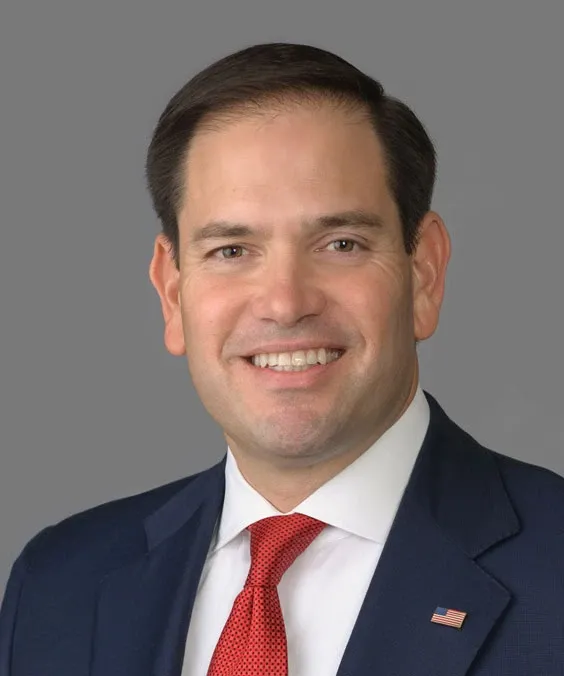
Mario Díaz-Balart
The Public Record
Mario Díaz-Balart is a Republican politician from Florida, currently serving as a member of the U.S. House of Representatives. He has represented Florida's 25th congressional district since 2013, and previously served the 21st district from 2003 to 2013. Díaz-Balart is known for his advocacy on issues related to immigration, particularly concerning Cuban-Americans, and has been vocal about the political situation in Cuba. He has also focused on economic development and healthcare policy during his tenure in Congress.
Mar 11, 2014
It is also pretty clear that they are not, frankly, in the business of exporting, western values, like democracy and the rule of law and human rights.
Mar 11, 2014
He went on to say that a much larger amount of drugs will flow up from Latin America and that he believes that U.S. authorities only seize about 20 percent of the narcotics in transit to the United States.
Mar 11, 2014
So many issues in the world, but I would like to bring it closer to home, to our hemisphere.
Mar 11, 2014
Let me shift a little bit now to Venezuela, if I may? INL's 2014 International Narcotics Control Strategy Report lists Venezuela as both a major money laundering country and a major drug transit country.
Mar 11, 2014
I would be remiss without first thanking you, and I have even written you a letter in which you responded very quickly, by the way, for I think in the administration nobody has been more forthcoming on support and solidarity with those who…
Feb 25, 2014
But, Mr. Holder, the question is, obviously Congress can do what it may, but Congress is not the one who has decided to allow or to not go after folks in a couple of States who now are, in essence, selling marijuana.
Feb 25, 2014
I think you all have--and you really do, because you are in charge and you do so--I mean you do--great risk in that case.
Feb 25, 2014
I think if a banker receives guidelines on how to deal with certain entities from the Federal government, I think that in itself would make it very unclear whether it is something that is illegal under Federal law.
Feb 25, 2014
the Caribbean leaders are saying, maybe we should just legalize--they talk about at this stage, legalize, the production of marijuana.
Feb 25, 2014
Is there going to be an organized, established, bureau, a process, a commission?
Feb 25, 2014
The other issue is, let me switch gears, it is the IRS's plans--there are no plans to move forward with the Real Time Tax System.
Feb 25, 2014
I think a big part of that is that we are getting mixed messages from the Federal Governments as to whether it is okay.
Feb 25, 2014
If it wants to change a law, it should either come to Congress or at the very least propose regulations to make the changes prospective.
Feb 25, 2014
It is calling into question millions of dollars of tax-exempt bonds already in the hands of investors.
Feb 25, 2014
According to Federal law, it is not a minor, benign substance. It is the same, according to Federal law, as other Schedule 1 controlled substances.
Feb 25, 2014
It is your responsibility to enforce Federal law; my understanding is that it has not changed that marijuana is illegal under Federal law.
Feb 25, 2014
And will you pledge to adhere to the report language in the current fiscal year 2014 omnibus?
Feb 25, 2014
As far as Congress is concerned, marijuana is illegal in Federal law. That has not changed, and your role is supposed to be, among the roles, is to enforce that Federal law.
Feb 25, 2014
The fact that you have marijuana that is according to federal law as illegal, and yet you have at least the DEA looking the other way by different aspects of the Federal Government.
Feb 25, 2014
I was pleased that they at least admitted to me that they were--the person said, I was not authorized to tell you the truth.
Politicians like Mario Díaz-Balart