Jul 13, 2009
Having a hearing on transportation's role in climate change is essential given the sector is responsible for roughly one-third of the greenhouse gases released in the United States.
The Public Record
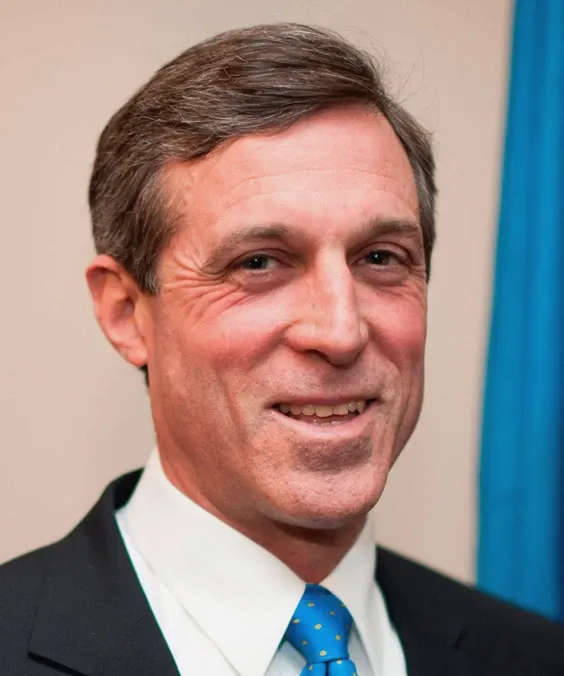
Tom Carper is an American politician currently serving as the senior United States senator from Delaware, a position he has held since January 3, 2001. A member of the Democratic Party, Carper has focused on various issues including healthcare, environmental protection, and fiscal responsibility throughout his career. He previously served as the Governor of Delaware from January 21, 1993, to January 2, 2001, and as a member of the U.S. House of Representatives from January 3, 1983, to January 21, 1993.
Having a hearing on transportation's role in climate change is essential given the sector is responsible for roughly one-third of the greenhouse gases released in the United States.
As for those who want to demonize cap-and-trade, their numbered States are part of the energy program already, including Delaware.
The development patterns that we have experienced in this country over the last 30 to 40 years are not the product of a market or invisible hand.
I think it is very important that this committee stays on the realities and looks at opportunities to reduce costs of freight and not increase our costs of operations.
The environmental and economic advantages of building new transit systems with freight rail capacity and smarter development are, I think, pretty well established.
Parts of my State are going to be underwater. Not just my State, but States along the East Coast from Maine to Florida.
The Waxman-Markey treatment of transportation fuels creates numerous problems.
I think that it is very clear that you are very knowledgeable of the role of the trucking industry and freight movement.
While this is a major improvement, we must remember that our goal is to reduce greenhouse gases by 60 to 80 percent.
I introduced, along with Senator Arlen Specter, the Clean Low Emission Affordable New Transportation Efficiency Act, known as CLEAN-TEA.
If designed correctly, is designating a significant portion of funds to transportation accompanying a climate bill cost effective?
The new standard requires the entire U.S. fleet of cars and trucks to average about 35 miles per gallon by 2020.
I think we have seen that. And I want my children, and their children, to be able to walk to school, to be able to bike along the streets, and to be able to feel that sense of community that we all felt when we were growing up.
In my opinion, the caps are completely severed from what technology is able to deliver in terms of reduced emissions.
If we do not curb emissions from transportation, we will either fail to reduce greenhouse gas emissions to the level scientists say are necessary, or we will have to ask other sectors to make up the difference.
I would agree. As I said before, Portlanders, we like to think we are unique. But in many ways we are typical Americans.
Transportation accounts for some 30 percent of greenhouse gas emissions in our country.
The conservative Republicans who live around there are for clean air because they breathe the air, and they know tourists come there to see the Smokys, not to see smog.
We didn't feel like it was appropriate for those allowances to be shifted over to the coal generators.
We look forward to working with you and providing you the technical assistance you need to move forward.
Senator Carper, your bill, the Clean Air Power Act, last year EPA did an analysis of the bill vintage 2005 that said its benefits would be $160 billion a year in 2020, and only at the cost of $9.5 billion at the same year.
Politicians like Tom Carper