Sep 15, 2009
I have spoken, I believe, with you before and with Mr. Zients about some work that is going on within the Department of Health and Human Services to try to go out and recover monies that have been improperly spent.
The Public Record
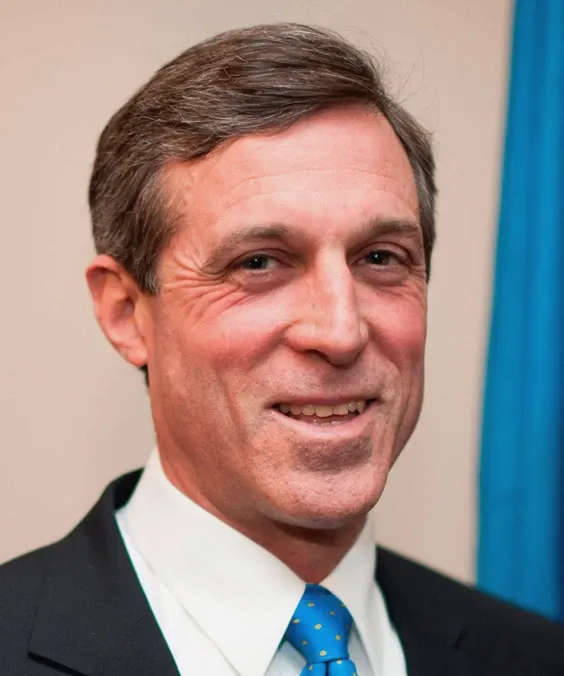
Tom Carper is an American politician currently serving as the senior United States senator from Delaware, a position he has held since January 3, 2001. A member of the Democratic Party, Carper has focused on various issues including healthcare, environmental protection, and fiscal responsibility throughout his career. He previously served as the Governor of Delaware from January 21, 1993, to January 2, 2001, and as a member of the U.S. House of Representatives from January 3, 1983, to January 21, 1993.
I have spoken, I believe, with you before and with Mr. Zients about some work that is going on within the Department of Health and Human Services to try to go out and recover monies that have been improperly spent.
Tom Carper of Delaware... pressed the president behind closed doors to bend on that and specifically, to hold off on that so-called public option for several years.
We must hold ourselves accountable, measure progress and verify the environmental benefits to regain the trust of taxpayers.
My guess is that somebody at DOD a couple of years ago... said, if we are going to run this agency the right way, we have got to do something about these award fees.
I believe there will soon be a time when tackling water quality issues and implementing the solutions seem perfunctory.
We created a Nutrient Management Commission that required all of the farms that spread nutrients to have a Nutrient Management Plan.
We talk a lot about carbon dioxide emissions and the need to rein in carbon dioxide emissions, and I fully agree with that.
The idea is to take about 15 percent of the nutrients from the poultry houses, take them to this facility, treat them under high temperature, create a pelletized organic fertilizer.
Delaware adopted a nutrient management law. This unique law requires nutrient management plans for the vast majority of farms in Delaware.
Those of us who live in the DelMarVa Peninsula and the Mid-Atlantic Region... we appreciate everything that you can do there.
I think one of our other witnesses in the second panel talked about the lack of training.
I think that is one of the fundamental reasons why you are seeing a significant reduction in the use of award-fee contracts in the Department of Defense.
We believe that, you know, now is the time to readjust sails and find those kinds of market-based economic solutions.
We would reduce the sulfur dioxide emissions by some 80 percent by 2015 and mercury emissions by some 90 percent by 2015.
I appreciate the leadership of Senator Cardin on this issue and a whole host of others.
As a peninsular State almost entirely surrounded by tidal waters and with the lowest mean elevation of any State, Delaware will likely be more affected by sea level rise than any State in the Nation.
I am confident that if we use market-based mechanisms, rather than traditional command and control approaches, we can incent the environmental outcomes that we need while keep our industries strong.
We are trying to reduce nitrogen oxide emissions by at least 70 percent between now and 2015.
We have been struggling a little bit trying to have our 126 Petition take into account the emissions that are coming from outside of our immediate corridor.
As your neighbor to the east, we want to be your partner in getting us to a cleaner, healthier Chesapeake Bay.
Then I think beyond that, one Department of Homeland Security official gave a contractor an award fee despite saying the contractor's actions were egregious and 'wasted taxpayer money.'
I think OMB's guidance, again, hits many of the key things, but what our work has shown, even this most recent report, is that the word has not gotten down to everyone throughout all the different agencies.
Politicians like Tom Carper