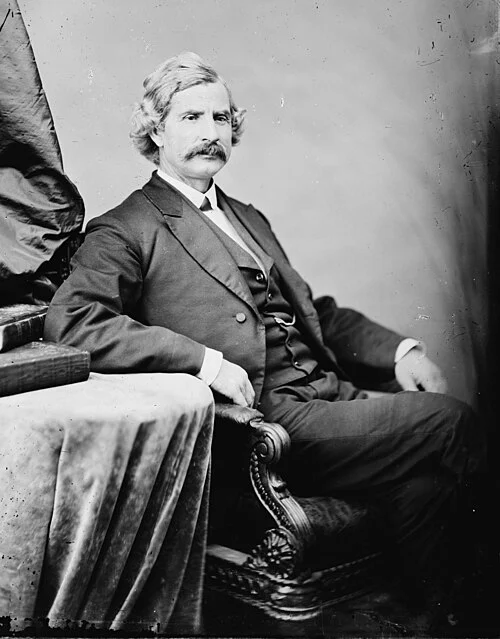
Tom Carper
The Public Record
Tom Carper is an American politician currently serving as the senior United States senator from Delaware, a position he has held since January 3, 2001. A member of the Democratic Party, Carper has focused on various issues including healthcare, environmental protection, and fiscal responsibility throughout his career. He previously served as the Governor of Delaware from January 21, 1993, to January 2, 2001, and as a member of the U.S. House of Representatives from January 3, 1983, to January 21, 1993.
Nov 18, 2009
Sometimes we can get bottled up around here over minor things, but hopefully that will not be a problem in this instance, and the idea is to move it as expeditiously as we can.
Nov 18, 2009
I think I speak on behalf of all my colleagues to say our heartfelt thanks to you for your service.
Nov 18, 2009
Where do you think the Postal Service and its employees have been successful over time in controlling labor costs and where do you think there might be opportunities for future savings?
Nov 18, 2009
The American public is OK with it, at least when compared to other alternatives like price increases.
Nov 18, 2009
Would you comment for us a little bit about how the Postal Service uses the Internet to provide services?
Nov 18, 2009
In the past, I have spoken about the need for the Postal Service not just to focus on closing facilities, but also on expanding access to the services that it offers.
Nov 18, 2009
I had hoped we would have time for you to go ahead and give your opening statement...
Nov 18, 2009
I have introduced legislation, along with some of my colleagues, to address this problem.
Nov 9, 2009
I think it is impossible to not acknowledge that an economy-wide greenhouse gas program would have a net negative impact on GDP.
Nov 9, 2009
I think some of the doomsday scenarios that we are hearing are vastly overstated.
Oct 28, 2009
We simply need to do a better job in contracting to make sure that the systems that we are buying as a government... are better technology
Oct 28, 2009
Thank you for your leadership, and our commendation is to you and to your colleagues.
Oct 28, 2009
Agencies are making the decision right now to spend another $1.3 billion to produce the paperwork we see here. Is there anything we can do about that?
Oct 28, 2009
Now, talk to us about other agencies being able to replicate the success that you enjoyed at the State Department.
Oct 28, 2009
In fact, just last week, the Congressionally-established U.S.-China Economic and Security Review Commission reported that China is strategically developing offensive capabilities that could be used against us in a future military conflict.
Oct 28, 2009
The issue du jour is cyber warfare. It isn't science fiction. It is reality.
Oct 28, 2009
I am concerned that the people who work in that office may not have the cyber security qualifications.
Oct 28, 2009
Thanks so much for your previous service to our country, and not just for the folks in Virginia, but also in Delaware and the other 48 States.
Oct 28, 2009
What works at State may not work at Commerce. It may not work in intelligence.
Politicians like Tom Carper