Feb 18, 2010
We cannot trade our dependence on foreign oil for a new dependence on Chinese-made solar panels, on Japanese electric vehicles, and on European wind turbines.
The Public Record
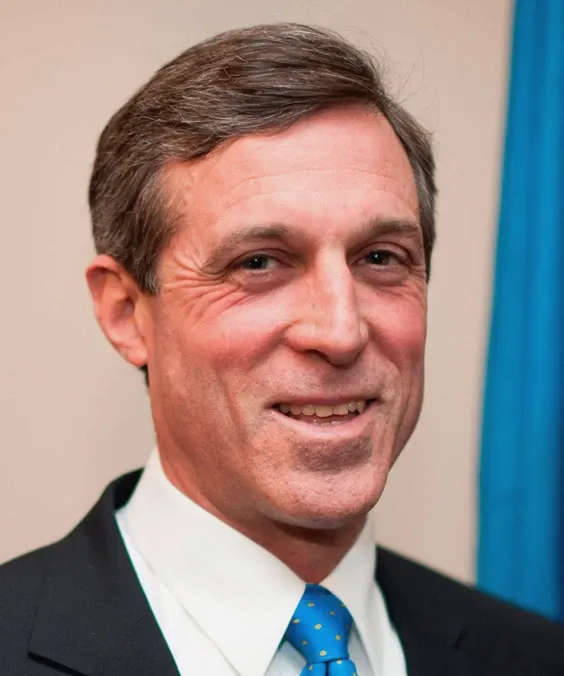
Tom Carper is an American politician currently serving as the senior United States senator from Delaware, a position he has held since January 3, 2001. A member of the Democratic Party, Carper has focused on various issues including healthcare, environmental protection, and fiscal responsibility throughout his career. He previously served as the Governor of Delaware from January 21, 1993, to January 2, 2001, and as a member of the U.S. House of Representatives from January 3, 1983, to January 21, 1993.
We cannot trade our dependence on foreign oil for a new dependence on Chinese-made solar panels, on Japanese electric vehicles, and on European wind turbines.
I want to thank you specifically, Senator Carper, for doing everything you have done to advance our cause in Washington.
The cleanest, most affordable form of energy is the energy we never use, and I fully subscribe to that and so does our President.
I feel very lucky to have been with you and to have heard all the wonderful, encouraging things that you are doing.
I know there are national organizations in which school districts participate and superintendents of school districts participate.
Particularly at the Federal level, what can we do better to enable you to do more.
I like the quote I once heard from a pastor of mine who used to say, people would rather see a sermon than hear one.
Over $10 billion would be saved over the next 10 years because of the Federal Executive Order, and that is real money that we are talking about.
I will certainly do if I am confirmed is to make that point very clearly to people operating nuclear power plants that it isn't the point that it is not hurting anyone.
I think Senator Alexander has already said this in so many words, but just in the last several weeks to have heard what the President said on the floor of the House of Representatives in the State of the Union address, the importance of…
What we can't afford are mistakes that will derail this renaissance in nuclear power.
I expect and the public expects that the NRC must be a strong, independent and effective regulator.
As Chairman of the Senate Clean Air and Nuclear Safety Subcommittee ensuring that the nuclear power industry functions safely is a top priority of mine.
I see value in reporting cost savings, along with some of the other measures of success that you have cited in energy efficiency.
But the idea was to take some next steps on vehicle-to-grid, where again we use a whole fleet of batteries in vehicles for storage, maybe for electricity you can create by offshore wind or onshore wind, or by solar or other renewables.
By making greenhouse gas reductions, the integrating metric for performance, the Executive Order encourages whole systems thinking.
I commend you very much, as I did the Postmaster General yesterday, for working as diligently as you are on so many fronts to rein in costs, control your expenses, and also to look for other ways to develop new sources of revenue, and I…
The good news is--and this goes back, again, to the test bed concept--where I think the Defense Department can really make a contribution is using its procurement power as an early technology adopter.
If the Department of Defense can't perform this task, there probably wouldn't be any Postal Service or Department of Energy or budget process.
Politicians like Tom Carper