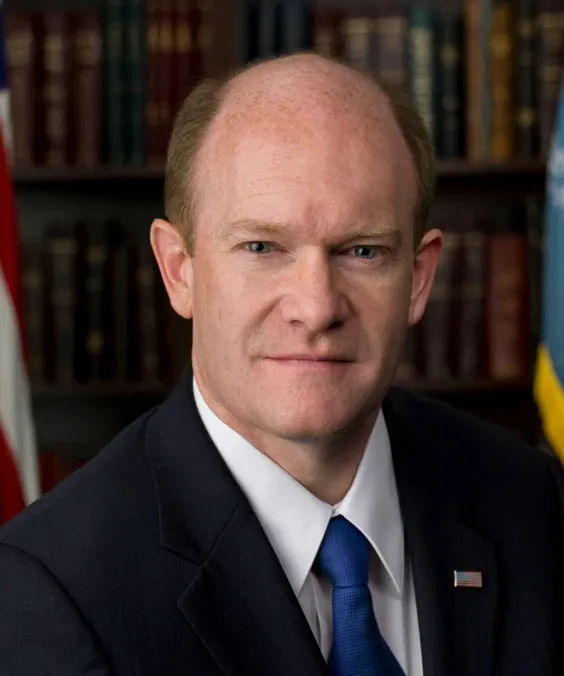
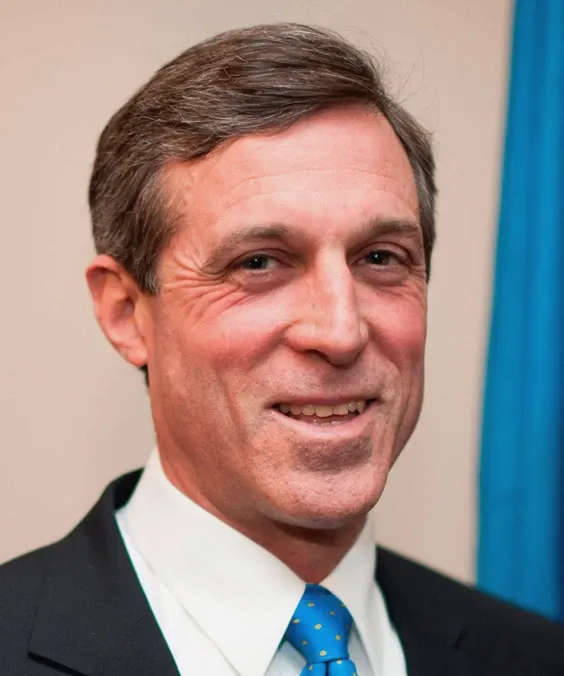
Christopher Coons
The Public Record
Christopher A. Coons is a United States Senator from Delaware, serving since 2010. A member of the Democratic Party, he has been involved in various legislative efforts, particularly focusing on foreign policy and international human rights. Coons has been a strong advocate for the Magnitsky Act, which imposes sanctions on foreign officials implicated in human rights abuses and corruption. His work in this area has garnered attention and support from various international leaders and organizations.
Apr 19, 2023
I just had a chance to be with David Beasley, along with the Vice Chair, the group of us who spent last week looking at food security--this is a daunting prospect this year, humanitarian relief, sustaining it is going to be challenging…
Apr 19, 2023
If what we hear in country after country is: we welcome U.S. investment, we welcome U.S. companies, we want help transforming our economy.
Apr 19, 2023
I think we can all agree that PEPFAR shows the extraordinary power of American determination, compassion, and ingenuity marshaled for the purpose of making the world a better place.
Apr 19, 2023
Supporting that innovation will do two things--one, lead to greater success, and two, provide that ground up pressure for change that will not only be related to health, but democratization and many other things.
Apr 19, 2023
I think the single best thing President Bush did, I think something that has been sustained over presidencies and majorities of both parties.
Apr 19, 2023
Your task is daunting, and this subcommittee must both rigorously oversee your work, and ensure you have the support and resources you need to protect and advance our national security and our national values.
Apr 19, 2023
With this relatively modest funding, Administrator Power, you are being asked to confront an historic confluence of complex global challenges.
Apr 19, 2023
I am grateful, the Vice Chair of the Full Committee, my friend and colleague from Maine, Susan Collins, is serving as the Ranking for this hearing.
Apr 19, 2023
If you include the supplemental funding that was provided in 2023, to address Russia's brutal invasion of Ukraine, the fiscal year 2024 request would actually be a 15 percent cut over the overall expenditures.
Politicians like Christopher Coons